Today's post from livestrong.com (see link below) looks at the potential benefits of yoga for people living with neuropathy. To my mind, this may be literally 'stretching' a point when it comes to the relief of nerve pain (especially in the feet and legs). If you've ever tried yoga, you'll know that it requires a level of fitness that tests even the healthiest bodies and while its benefits are sworn by, neuropathy patients may not be prepared to go through yet more pain to achieve a non-guaranteed end-result. Where it may well help is with people who are at the beginning stages of peripheral neuropathy and who can do the exercises (however gentle) without too much physical strain but I do wonder how many long-term neuropathy patients will be willing to take the risk. It may also help with neuropathy conditions such as sciatica, where entrapment is probably involved. However, we all know that exercise is good (and even necessary) for neuropathy patients but subscribing to the theory of 'no pain, no gain' may just be a stretch too far. I'm very willing to be proved wrong here and success stories will be published.

by ANDREA CESPEDES Last Updated: Dec 24, 2010
Tingling, numbness, sensitivity to touch and lack of coordination are all telltale signs that you may have damage to your peripheral nervous system, a condition known as peripheral neuropathy. Yoga is one of many therapies that may help strengthen the communication pathways between your nerves and your brain, alleviating symptoms and discouraging progression.
A Peripheral Neuropathy Primer
Your peripheral nervous system consists of the sensors that transmit information between your brain and spinal cord and the rest of your body, including your skin, digits, arms and legs. Muscle weakness, abnormal sensitivity to temperature changes and, over time, paralysis, impaired digestion and disrupted endocrine function can develop.
Causes of peripheral neuropathy are varied. You might experience it as a result of a traumatic accident, such as a fall or car accident; repetitive stress, as is the case in carpal tunnel syndrome; or from metabolic and endocrine disorders, which includes diabetes. Cancer, certain infections, autoimmune disorders, nueromas and small vessel disorders may also be to blame.
Regardless of the cause of your nervous system compromise, you want to increase the communication between your spine, brain and nerves throughout your body. While your doctor must help you treat the underlying condition, yoga can assist in symptom management.
Yoga's Potential
Research has revealed potential for treatment of neuropathy with yoga practice. A 2002 issue of the Indian Journal of Physiology and Pharmacology reported a study showing that, among 20 people with type 2 diabetes, yoga performed 30 to 40 minutes daily for 40 days improved nerve function and glycemic control (high glycemic levels aggravate neuropathy.)
A 2012 review of the research of the effects of yoga on nervous system disorders published in Annals of Indian Academy of Neurology confirmed yoga as a valid integrative and complementary therapy for conditions such as peripheral neuropathy. Remember that yoga ought to be combined with other treatments; it shouldn't be your only line of attack. Lifestyle modifications, medical interventions and electrical nerve stimulation are also important strategies.
Poses to Practice
The severity of your condition determines the type and intensity of yoga you'll practice to address peripheral neuropathy. Less-advanced cases may do well with a Hatha-style class that involves seated and standing postures, including Triangle pose, Camel and Bow pose.
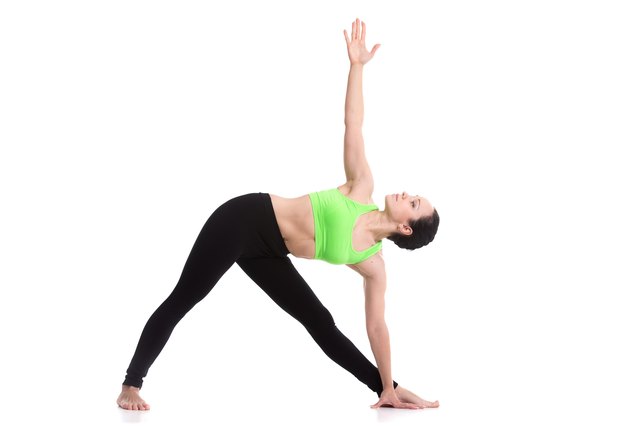
More advanced neuropathy may require a gentler practice, but you can still benefit from meditation, gentle twists and supported backbends. Use a bolster or block for support in Bridge pose or reclining Hero, for example.
All of these poses are particularly beneficial in opening the front side of your body, increasing oxygenation of tissues and improving blood circulation to nerves.
The Benefits of Relaxation
A regular yoga practice teaches you to handle the stress of living with peripheral neuropathy. Meditation and deep breathing helps you learn how to live through distraction, even painful physical ones as can happen with nerve disorders. When you learn how to breathe and be present on the mat, you can more easily shift into a pattern of acceptance off the mat. Peripheral neuropathy can't be cured, only contained, so acceptance is essential.
The body-mind connection acquired through yoga also helps benefit you when trying to manage the symptoms of peripheral neuropathy. You'll have a better sense of how you react to specific poses and which ones are helpful and which are aggravating. This translates off the mat, so you have an idea of what activities you can push through, what may set off an episode and how you can manage symptoms of neuropathy when it occurs.
Read More: How to Relax the Nervous System Naturally
http://www.livestrong.com/article/342259-yoga-for-peripheral-neuropathy/


