Today's post from prohealth.com (see link below) asks the question whether both small fibre and large fibre neuropathy are present in Fibromyalgia. Fibromyalgia is a disorder characterized by widespread musculoskeletal pain accompanied by fatigue, sleep, memory and mood issues and many patients have also reported the sort of widespread neuropathic symptoms readers of this blog are familiar with. However, experts have long tried to keep the two conditions apart, having found no proof that they can be concurrent. Then it was concluded that small fibre neuropathy may well be a symptom of fibromyalgia and now, they've added large fibre neuropathy to the mix as well. The consistent aching associated with fibromyalgia is thought to be caused by the way the brain handles pain but that is very close to the root cause of neuropathic symptoms too. Fibromyalgia patients also typically suffer symptoms above the waist and neuropathy sufferers below the waist but when the patient has both sets of symptoms, the root cause must be pretty much the same and the consequences for the patient are miserable to say the least. At least they are now thinking that both conditions are neurological and therefore symptomatic of nerve damage somewhere in the nervous system. Equally importantly it has now been found that both show demyelinating damage (damage to the protective lining of the nerves) leading to undeniable connections between both diseases.

By Cort Johnson • www.ProHealth.com • June 11, 2014
Reprinted with the kind permission of Cort Johnson and Health Rising.
We report here a surprisingly high prevalence of clinical and electrodiagnostic (EDX) abnormalities implying a demyelinating polyneuropathy, suggestive of chronic inflammatory demyelinating polyneuropathy (CIDP), in FMS. Caro et. al 2008
With three studies finding evidence of small fiber neuropathy in significant numbers of people with Fibromyalgia, the skin has become of increasing interest. (Small fiber neuropathy refers to damage to the small nerve fibers in the skin. Skin biopsies are used to determine if SFN is present).
Caro was the latest researcher to find evidence of nerve problems in FM and it turns out, he was the first as well.
From Immune Problems in the Skin
Science often moves slowly and it has in this case as well. Thirty years ago in 1984 Caro found evidence of an autoimmune process – IgG antibodies in the dermal-epidermal junction – in the skin of people with FM. Two years later he validated his findings in a blinded study. That same year Dineman found increased prevalence of Raynaud’s phenomenom, dry mouth, low complement, ANA and IgG antibodies in the skin as well. Something unusual appeared to be occurring in the skin of people with FM but progress defining it was slow.
To the Nerves….
In 1988, Sim’s study “Symptoms mimicking neurological disorders in Fibromyalgia” put a focus on the nerves. Caro reported on nerve conduction tests in FM in 2005 and then in 2008 provided the first evidence of peripheral neuropathy.
Small fiber neuropathy is kind of the rage in FM right now, but Caro’s 2008 study suggested that larger nerve neuropathy (demyelination) was also present. In this article, we take a look at that 2008 study containing 58 Fibromyalgia patients.
The Study
X. J. Caro, E. F. Winter and A. J. Dumas. A subset of fibromyalgia patients have findings suggestive of chronic inflammatory demyelinating polyneuropathy and appear to respond to IVIg. Rheumatology 2008; 47;208–211
A ‘demyelinating polyneuropathy’ was reported present when EMG and nerve conduction studies revealed nerve conduction speeds two (and often three) standard deviations below normal in two or more nerves. (Nerve signals travel more slowly in demyelinated nerves.). Caro, et. al followed standards proposed by the Inflammatory Neuropathy Cause and Treatment (INCAT) group for demyelinating polyneuropathy.
The Findings
With 76% of patients reporting paresthesias (tingling), 88% percent reporting hypaesthesia (loss of sensation – with increased loss in the lower extremities) and 90% reporting weakness, the symptom presentation in FM suggested nerve damage was present. (The ‘stocking distribution’ of nerve symptoms which involves worsening symptoms the further down the limbs one goes is highly emblematic of peripheral nerve disorders.)
Greatly increased rates of nerve symptoms as well as muscle weakness in people with FM (90%) compared to people with rheumatoid arthritis (13%) suggested FM was a far different type of disease than it’s rheumatological counterpart. (Martinez-Lavin found that 95% of FM patients as opposed to 30% of RA patients reported sensory symptoms as well).
Nerve conduction studies revealed a polyneuropathy was present in almost 50% of their FM patients. Seventy percent of the FM patients with polyneuropathy had evidence of demyelination. (Note that demyelination refers to large nerve fibers; small nerve fibers are not myelinated.) Sural nerve biopsies suggested myelin injury (segmental de and re-myelination and/or myelinated nerve fiber dropout) had occurred in the majority of those tested. (They revealed no vasculitis or amyloidosis and provided little evidence of what was causing the demyelination.)
Chronic Inflammatory Demyelinating Polyneuropathy
Comparing FM to chronic inflammatory demyelinating polyneuropathy (CIDP), Caro put FM squarely in the realm of an immune mediated neurological disorder.
CIDP is an inflammatory disorder affecting the peripheral (as opposed to the central) nervous system. Considered a chronic form of Guillain-Barre disease, CIDP is characterized by the loss of the myelin sheath in the larger nerves in the body.
The symptom presentation is quite heterogeneous and includes weakness, fatigue, numbness, tingling, pain, difficulty in walking, burning pain in the extremities, and sudden onset back or neck pain radiating down to the arms and /or legs. Loss of deep tendon reflexes (rarely increased or normal), loss of muscle mass and fasciculations (twitching) may be present. Autonomic dysfunction can cause problems standing (orthostatic intolerance, bladder, bowel and/or cardiac problems).
Left untreated about 30% of CIPD patients will end up in a wheelchair.
FM patients were determined to have a CIDP-like illness when they exhibited lower extremity stocking hypaesthesia (loss of sensation), muscle weakness in at least two extremities, and evidence of a demyelinating polyneuropathy.
Following Latov’s proposal that “most acquired demyelinating neuropathies of otherwise unknown etiology are considered to be a form of CIDP’, Caro and Winter proposed that a significant subset of FM patients have a form of CIDP.
CIDP is another disorder with decided overlaps with ME/CFS and FM. As with ME/CFS, the lack of agreed upon clinical criteria have thwarted clinical trials. It’s widely acknowledged that the criteria often used to diagnose CIDP misses many leaving many untreated (including ME/CFS and FM patients????)
Treatment
Treatments include steroids, IVIG and immunosuppressive drugs such as Rituximab. Suspecting that an immune mediated nervous system disorder similar to CIPD was present Caro started IVIG treatment in 15 patients. A ‘large percentage’ reported significant improvements in pain, tender points and strength.
Update
Since Caro’s 2008 report indicating reduced nerve conduction and possibly demyelination of the large nerves in the body, Nacir, et. al found widespread evidence of decreased nerve conduction velocity in the upper bodies of FM patients.
Conclusion
This study and others suggest that some people with FM could have both small and large fiber neuropathies. If you have symptoms similar to those described above, nerve conduction tests (for the large fiber neuropathy) and skin biopsies (for the small) may be warranted.
Caro and others propose that the neuropathies in Fibromyalgia are probably immune mediated and propose immune therapies for them.
About the Author: Cort Johnson has had ME/CFS for over 30 years. The founder of Phoenix Rising and Health Rising, Cort has contributed hundreds of blogs on chronic fatigue syndrome, fibromyalgia and their allied disorders over the past 10 years. Find more of Cort's and other bloggers' work at Health Rising.
http://www.prohealth.com/library/showarticle.cfm?libid=18996
Today's post from ndnr.com (see link below) is a look at electropuncture and a gluten-free diet as possible effective treatments for severe neuropathy. There are two points to make here: 1) nothing like this should be tried before consulting with as many professionals as possible to see whether they approve of the idea and see it as a viable option and 2) both sides of the treatment take a considerable time to work (if they work at all in your case) and therefore require an extremely sympathetic insurance company, or sacks full of cash to pay for it. For many people, the latter is already a reason not to go down this route. The article is based on a case study, which makes interesting reading and you may be surprised at the parallels with your own situation. Changing to a gluten-free diet is both a hot topic and a controversial one, as the evidence is not overwhelming that it works in the case of nerve damage but many people seem to benefit from it so it may be something for you but again...with advice.

By Editor1 Posted July 4, 2013
Lydia Thurton, ND
Abstract
This study describes the case of a 55-year-old male with painful peripheral neuropathy, which was severely hindering his quality of life. Despite numerous pharmaceutical interventions, his pain was poorly managed. Electroacupuncture and a gluten-free diet were successfully utilized, resulting in pain resolution and a return of patient functionality.
Introduction
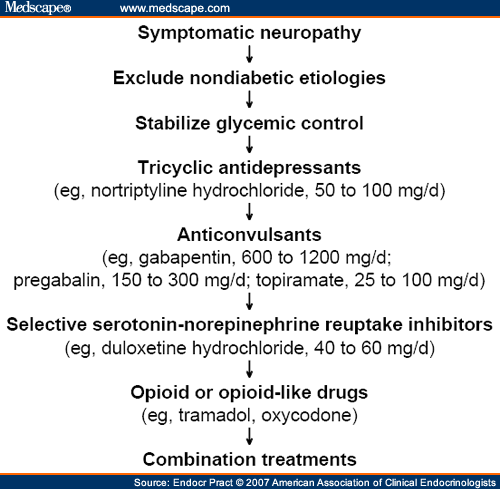
Peripheral neuropathy is a poorly understood chronic pain condition resulting from the demyelination and degradation of axonal nerve fibers. Neuropathies can be the result of toxic exposures, metabolic conditions, traumatic injuries, or infections.1 In some instances, the etiology cannot be elucidated. A neuropathy is commonly treated with a variety of medications, eg, non-steroidal antiinflammatory drugs, opioids, anticonvulsants, and antidepressants.2 The success of these pharmacologic interventions varies and complete cure is not expected. Recently, there has been growing concern about the abuse potential of opioid medication. With this growing recognition, a need for alternative solutions for chronic pain, including neuropathic pain types, is particularly relevant. This article will present the case of B.F., a 55-year-old male who presented with a case of peripheral neuropathy that was resolved with dietary gluten elimination and electroacupuncture treatments.
Case Presentation
B.F., a 55-year-old male, presented with classic paraesthesia symptoms of neuropathic pain: burning, tingling, and, as he described it, “biting” sensations in his feet, jaw, and fingers bilaterally. The pain began approximately 2.5 years prior to our first meeting in May, 2012. Tests for vitamin B12 deficiency, blood glucose, inflammation, and HIV were all unremarkable. B.F. did test positive for low serum testosterone, which was treated with intramuscular injections. Physical exam revealed hypesthesia bilaterally that was particularly focused on the medial aspect of the first toes. MRI, ultrasound, and circulatory imaging studies revealed only mild arthritis of the first MCP joint. A neurologist conducted electrophysiological testing, and B.F. was diagnosed with peripheral neuropathy.
B.F. had a history of alcoholism and working with toxic materials in the heating, ventilating, and cooling industry (HVAC). Alcohol abuse is an independent risk factor for peripheral neuropathy.3 B.F. was prescribed varying combinations of medications over a 2-year duration that included: allopurinol, naproxen, colchicine, prednisone, tramadol, gabapentin, morphine, pregabalin, ketorolac, nortriptyline, duloxetine, hydromorphone, and nabilone. B.F. was also obtaining morphine, methadone, marijuana, oxycontin, and occasionally cocaine from street sources to supplement his pain medication. B.F. expressed frustration with the medications, as he often experienced fatigue, dysphoria, impaired cognitive function and withdrawal effects, while his pain continued to increase in intensity.
Management and Care
B.F. commenced weekly acupuncture treatments. Point selection was based on a combination of his Traditional Chinese Medicine diagnosis and areas of maximal pain. Common points used were LI11, SJ5, LR2, SP2, SP6, GB40 and “well points” on the feet, which are the most distal points on each acupuncture channel. When treatment initially commenced, with a frequency of one pulse per second, the current level was at 24 mA (milliamps). After 10 months of treatment, the current level was reduced to 16 mA as his paresthesia began to heal. The frequency remained unchanged. Neuropathic pain was severely hindering B.F.’s activities of daily living. Activities like playing guitar, sustained walking and standing, and working as a HVAC technician were impossible when he first presented to me. His day-to-day functionality was used as a marker for treatment success, as well as his subjective rating of pain intensity.
After 1 month of electroacupuncture treatment, his symptoms, by his account, had improved by 75%. When B.F. started treatment, a folded towel would have to be placed on the floor because it was extremely painful for his feet to make contact with a hard surface. After 4 treatments, this measure was no longer necessary. After 5 months of treatment, B.F. was able to reduce treatments to biweekly.
Dietary change occurred slowly over the course of months, beginning with increasing his intake of plant-based foods, and progressing to elimination of refined sugar and gluten after 2 months. In the case of B.F., he did not manifest gastrointestinal symptoms characteristic of gluten-based enteropathies and he tested negative for anti-gliadin antibodies. However, by his own account, pain symptoms improved by 90% when he eliminated gluten. Currently, when B.F. consumes gluten in any significant quantity, he notes an almost immediate exacerbation of his foot neuropathy.
Medication weaning was done under B.F.’s own initiative and to date he has been able to eliminate all of the aforementioned medications except methadone. Currently he is participating in a methadone harm-reduction program to safely wean him from high-dose opioid medication. He uses marijuana sporadically and is a member of a marijuana compassion center. B.F. has resumed modified work duties and the day-to-day activities he enjoys.
Discussion
Peripheral neuropathy is a poorly understood but common manifestation of gluten sensitivity and celiac disease.4,5 The case of B.F. also suggests that even without the classic serum markers for celiac, adopting a gluten-free diet can assist in nerve pain resolution. Any patient presenting with bilateral sensory peripheral neuropathy should be screened for anti-gliadin antibodies. Neuropathy symptoms can precede or exist without gastrointestinal symptoms. While it is common for anti-neuronal antibodies to be present in celiac patients, serum measurements of antibodies do not directly correlate to subjective patient experience of nerve pain.6
Anti-gliadin IgG and IgA antibodies cross-react with synapsin-1, a ubiquitous phosphoprotein present on both central and peripheral nervous cells. Synapsin-1 is largely responsible for forming and regulating synaptic vesicles.7 Autopsy studies of patients with peripheral neuropathy and gluten sensitivity show destruction of the dorsal root ganglia and peripheral spinal cord columns. Malabsorption of micronutrients may also contribute to derangement of the nervous system in the celiac patient population.5 As gluten-free diets have notoriously low patient compliance, it is important that the attending ND provides dietary planning guidelines that support strict adherence and patient success.
Thanks to the research of Bruce Pomeranz, we know that acupuncture needling has the ability to manipulate nociceptors, proprioceptors and autonomic nerve pathways. Pain relief starts with a cascade of enkephalins, dynorphins and endorphins in the spine, midbrain and hypothalamus-pituitary region. In response to these chemicals, serotonin, norepinepherine, monoamines, and endorphins are released, decreasing substance P and the subsequent pain response. Electroacupuncture serves to add additional needle stimulation.8 Cha et al. (2010) found that electroacupuncture reduces nitric oxide synthase, thereby decreasing nerve allodyina.9 There are a number of research studies that support the use of acupuncture and electroacupuncture as a means of treating neuropathic pain of various etiologies. The most commonly studied neuropathies are those that are chemotherapy-induced, HIV-related, and diabetic.10,11,12,13
Conclusion
While case studies do not provide generalizable data, gluten elimination and electroacupuncture each have their own bodies of research to support their use as treatments for peripheral neuropathy. A limitation of this case, from a research perspective, is that dietary improvement and electroacupuncture were initiated simultaneously, making it difficult to isolate the individual effect of each treatment modality. However, B.F. was able to communicate some distinction. He noted that pain management was the best immediately after acupuncture and it would wane until his subsequent appointment. Furthermore, if B.F. was not stringent about his gluten avoidance, he would experience transient pain flare-ups. While this is a limitation in terms of research, in a clinical setting it is positive that NDs have numerous modalities that work synergistically to achieve patient healing.
Lydia Thurton, ND, graduated from the Canadian College of Naturopathic Medicine in 2010. Lydia maintains a general family practice in Pickering, Ontario and is also the naturopathic physician for the AIDS Committee of Durham Region. Her special area of focus is on African-Canadian, and Caribbean patient populations and she is a regular contributor to the Toronto Caribbean News.
References
Peripheral neuropathy. Mayo Clinic Web site. Updated Novemeber 2, 2011. http://www.mayoclinic.com/health/peripheral-neuropathy/DS00131/DSECTION=causes. Accessed May 10, 2013.
Rowbotham MC, Twilling L, Davies PS, et al. Oral opioid therapy for chronic peripheral and central neuropathic pain. N Engl J Med. 2003;348(13):1223-1232.
Ferrari LF, Levine E, Levine JD. Independent contributions of alcohol and stress axis hormones to painful peripheral neuropathy. 2013;228:409-417.
Hadjivassiliou M, Rao DG, Wharton SB, et al. Sensory ganglionopathy due to gluten sensitivity. 2010;;75(11):1003-1008.
Freeman HJ. Neurological disorders in adult celiac disease. Can J Gastroenterol. 2008;22(11):909-911.
Alaedini A, Okamoto H, Briani C, et al. Immune cross-reactivity in celiac disease: anti-gliadin antibodies bind to neuronal synapsin I. J Immunol. 2007;178(10):6590-6595.
Briani C, Zara G, Alaedini A, et al. Neurological complications of celiac disease and autoimmune mechanisms: a prospective study. J Neuroimmunol. 2008;195(1-2):171-175.
Pomeranz B, Stux G, eds. Scientific Bases of Acupuncture. Berlin, Germany: Springer-Verlag; 1989.
Cha MH, Bai SJ, Lee KH, et al. Acute electroacupuncture inhibits nitric oxide synthase expression in the spinal cord of neuropathic rats. Neurol Res. 2010;32 Suppl 1:96-100.
Phillips KD, Skelton WD, Hand GA. Effect of acupuncture administered in a group setting on pain and subjective peripheral neuropathy in persons with human immunodeficiency virus disease. J Altern Complement Med. 2004;10(3):449-455.
Wong R, Sagar S. Acupuncture treatment for chemotherapy-induced peripheral neuropathy–a case series. Acupunct Med. 2006;24(2):87-91.
Schröder S, Liepert J, Remppis A, Greten JH. Acupuncture treatment improves nerve conduction in peripheral neuropathy. Eur J Neurol. 2007;14(3):276-281.
Hwang HS, Yang EJ, Lee SM, et al. Antiallodynic Effects of Electroacupuncture Combined with MK-801 Treatment through the Regulation of p35/p25 in Experimental Diabetic Neuropathy. Exp Neurobiol. 2011;20(3):144–152 http://ndnr.com/pain-medicine/acupuncture-and-gluten-elimination-for-peripheral-neuropathy-a-case-study/
Today's post from sciencedaily.com (see link below) looks at new attempts to combine two types of medication to produce a better result than using one on its own. In the current climate where opioids are receiving so much negative publicity and genuine chronic pain patients are suffering the backlash, this may be an attempt to lessen the impact of the opiate by combining it (in this case) with an epilepsy drug (carbamazepine) which is also often used to treat neuropathy in isolation. Over the years this returns to the headlines as an option but never really seems to have taken off and become first-line treatment. if the claims are as beneficial as is being stated, it may be worth talking to your doctor or specialist about.
Combining epilepsy drug, morphine can result in less pain, lower opioid doses
Date: September 15, 2014 Source: Indiana University
Summary:
Adding a common epilepsy drug to a morphine regimen can result in better pain control, fewer side effects and reduced morphine dosage, according to research. The result could bring significant relief to many patients with neuropathic pain, a difficult-to-treat condition often felt in the arms and legs and associated with nerve tissue damage.
Adding a common epilepsy drug to a morphine regimen can result in better pain control with fewer side effects. Moreover, the combination can reduce the dosage of the opioid needed to be effective, according to a team of pain researchers at Indiana University.
The result could bring significant relief to many patients with neuropathic pain, a difficult-to-treat condition often felt in the arms and legs and associated with nerve tissue damage.
"There is a huge unmet need for better treatments for neuropathic pain," said Fletcher A. White, Ph.D., the Vergil K. Stoelting Professor of Anesthesia at the Indiana University School of Medicine.
In laboratory tests using rodents, White and his colleagues found that while morphine lost its pain-relieving effectiveness three weeks after nerve injury, a combination therapy of morphine and carbamazepine -- used to prevent epileptic seizures -- could effectively reverse this loss of drug action. Their findings were reported in the journal PLOS ONE.
Although morphine and related opioid drugs are effective in treating pain, they can result in dependence and produce side effects including respiratory depression, nausea, constipation and other problems. In addition, such drugs can, paradoxically, actually cause pain, a condition called opioid-induced hyperalgesia.
"People immediately think, 'Oh, it's tolerance, the patient needs more of the drug for pain control,'" Dr. White said.
In fact, research indicates that the pain of hyperalgesia occurs because the morphine latches on not only to cellular targets that reduce pain sensation but to other "non-opioid" targets that result in activation of pain-sensing neurons. Dr. White and his colleagues had previously identified a key cellular factor -- known to be a specific voltage-gated sodium ion channel -- involved in that non-opioid process of pain nerve stimulation. Meanwhile another IU School of Medicine researcher, Theodore Cummins, Ph.D., professor of pharmacology and toxicology, had previously determined that carbamazepine alone has the opposite effect on the same ion channel.
Combining the two drugs could prevent the escalating doses of opioids that are sometimes prescribed to provide pain relief in the clinic.
"We know that opioids have benefits," Dr. White said. "If we can diminish the off-target effects, that's good. If we can diminish the opioid dosages required for pain relief, then you've really got something."
Because both drugs are approved for use by the Food and Drug Administration, physicians have tested the combination with patients, resulting in anecdotal reports of significantly improved pain management, Dr. White said. More formally, Dr. White and physician-researchers have begun testing the combination of morphine and a close relative of carbamazepine with patients in a small clinical trial at the Indiana University Melvin and Bren Simon Cancer Center.
In addition to Dr. White, researchers contributing to the study were Michael R. Due, Xiao-Fang Yang, Yohance M. Allette, Aaron L. Randolph, Matthew S. Ripsch, Sarah M. Wilson and Erik T. Dustrude of the IU School of Medicine; and Rajesh Khanna of the College of Medicine, University of Arizona.
The research was funded by National Institutes of Health grants NIDDK DK100905 and NIDA DA026040 and the Indiana Spinal Cord and Brain Injury Research Fund.
Story Source:
The above story is based on materials provided by Indiana University. Note: Materials may be edited for content and length.
Journal Reference:
Michael R. Due, Xiao-Fang Yang, Yohance M. Allette, Aaron L. Randolph, Matthew S. Ripsch, Sarah M. Wilson, Erik T. Dustrude, Rajesh Khanna, Fletcher A. White. Carbamazepine Potentiates the Effectiveness of Morphine in a Rodent Model of Neuropathic Pain. PLoS ONE, 2014; 9 (9): e107399 DOI: 10.1371/journal.pone.0107399 http://www.sciencedaily.com/releases/2014/09/140915153613.htm