Showing posts with label Better. Show all posts

Sunday, August 20, 2017

Got Neuropathy Will It Get Better Or Worse


Today's post from neuropathyjournal.org (see link below) asks the question we all want to know and provides the answer, that none of us, including the doctors, know whether our nerve damage will get worse or not. They also don't know if it will improve, yet for some people it does. Some patients seem to get better only for the symptoms to return some time later, maybe in a different place and maybe much worse than before. It's that sort of disease unfortunately and at the moment there's not a damn thing we can do about it except hope we will find the right medication for us that will reduce the symptoms and make life bearable. Of course doctors can predict outcomes but not to any certainty and it is often left to the patient to negotiate his or her way through the minefield of neuropathy medications and treatments. That's character building!


Will My Neuropathy Get Worse?
By LtCol Eugene B Richardson, USA (Retired) BA, MDiv, EdM, MS28 

One issue neuropathy patient’s face is the fear that their neuropathy will grow progressively worse. Neurologists call this a progressive polyneuropathy. The truth: no one really knows if your neuropathy will worsen, stay the same or disappear. A neurologist shared that this may have more to do with the underlying cause of the neuropathy, genetics, and heaven only knows, issues.

I speak of this very fear in chapter twelve, Focus, in the DVD “Coping with Chronic Neuropathy”, and if you have not viewed this chapter, I suggest that you do so. The viewing will provide a better perspective.

Neuropathy patient fears are often increased by the coming and going (remitting and relapsing) of neuropathy symptoms. These patterns are a medically confirmed fact and also occur in many other chronic illnesses. Better recognized are the same patterns for some forms of MS (Multiple Sclerosis)!

Neurologists confirm that there are acute neuropathies that come on suddenly and then the symptoms disappear. In other neuropathies symptoms occur, disappear and then return at the same level. Other neuropathies occur, disappear and then return at increased levels and in more places of the body. Others come, go and then go away for years only to return with a vengeance!

The chronic neuropathies (affect one set of nerves) and polyneuropathies (affect many nerves), which increase for years are often referred to as progressive polyneuropathies. The mystery is increased as there seems to be no rhyme or reason for these patterns. The only thing I noticed is that when I increased activity, I have increased burning, pain or other symptoms and I neurologist tell me that this is due to making damaged nerves work.

For years between the emotional highs when my symptoms remitted (“Hurrah, they’re gone!”) and the emotional lows when they relapsed (“Oh no, they’re back!”), I was tempted to worry that my symptoms were going to worsen and guess what, they did! But one has to ask the question, did the energy spent on worry change anything? No! What I re-discovered was what I learned in Sunday school. It was better to spend my time and energy finding a doctor who was trained (neuromuscular neurologist) in the clinical approaches to neuropathy then to waste energy on worry. I needed a doctor, not worry, to focus on my symptoms. I needed a doctor working with me as a partner, while treating the symptoms and looking for the TYPE and/or CAUSE. Why finding the type of neuropathy important? Because as Dr. Latov in his book tells us, this can often point in the direction of a cause! I needed a medical Sherlock Holmes, not time worrying about what might happen.

This approach maintained a focus on self empowerment by learning all I could, while prodding the doctors with questions that helped them think and act. The most important question for you is not, will my neuropathy get worse, but what is the type of neuropathy and/or the underlying cause? Spend your energy looking for the type and/or cause, as no one knows if your neuropathy will worsen or not.

I know that for so many of you neuropathy has been a progressive illness which worsened over the years. Conversely, my progressive polyneuropathy has not killed me, for my neuropathy symptoms began at age 31 and I am now 76. Thirty-five years into the symptoms with a million denials with a diagnosis from mentally ill to idiopathic neuropathy. I was given one drug which drove me to talk backwards and then another that reduced pain by 80%. Five years later with the miracle of IVIg I am able to keep breathing and the chest muscle spasms stopped while reducing other mind numbing symptoms. This took many doctors, lots of research and knowledge, while asking good questions and giving doctors documents from experts. It may have been fear and anger which drove me forward, but it was these focused actions that brought help, not dwelling on my fears!

It is important to know which issue is important as you set goals for getting help. It is important to focus your energy on learning, getting help with symptoms and finding the cause and solutions for the diagnosed illness. I do not mean idiopathic neuropathy (of unknown cause). It is very difficult to find a solution, other than for symptoms, when the neuropathy is of unknown cause. Help the doctor think and pushing the system to do the testing that is now available. Click here to read about my opinion on Idiopathic Neuropathy.

Tests that are available will allow the doctor to know if the neuropathy is large or small fiber, motor, sensory or autonomic, axonal, immune-mediated, demyelinating or inflammatory and these clues can lead to a possible identification of the type and/or cause that is more helpful than idiopathic.

RESOURCE: Read Dr. Scott Berman’s book, as this book may provide insight on these issues. Click here to view the recommended Books On Neuropathy. Dr. Berman has untreatable CIDP (chronic inflammatory demyelinating polyneuropathy) and his book speaks to all neuropathy patients as one who has been in our shoes with many neuropathies. Dr. Berman empowers us to face creatively the emotional issues we ALL face in chronic illness.

https://neuropathyjournal.org/will-my-neuropathy-get-worse/

Thursday, August 17, 2017

Doctor Patient How To Better Help Yourself


Today's post from online.wsj.com (see link below) looks at how the health care industry is exploring new ways of getting patients more involved in their own care. It's maybe not surprising that in these days of universal cut-backs, that this sort of idea is gaining ground - it's more cost-effective. Patients are pretty fed up with being burdened with yet more responsibility for the sort of care they've always taken for granted but nevertheless, there are some good ideas here. This blog has always encouraged people living with neuropathy to take more responsibility for their lives with the disease. That can mean anything from making detailed lists of symptoms, dates etc before going to the doctor, to doing as much research as possible to create a partnership with the doctor, thus achieving the best possible care. Neuropathy is not a disease that plays by the book, so the more we know and understand, the better we can deal with it. Certainly worth a read to see if anything might strike you as a good idea for your own situation.


The Health-Care Industry Is Pushing Patients to Help Themselves
Providers are Using Tech Tools and Personalized Approaches to Get Patients More Engaged


By Laura Landro

C.J. Burton
June 8, 2014 4:54 p.m. ET

It's the last mile in the race to fix health care—getting patients more involved.

Hospitals, doctors and public-health officials are pushing patients to keep track of their medical data, seek preventive care and stay on top of chronic conditions. They're measuring how motivated patients are to manage their own health and adopting a wide range of strategies to help them do better, a concept known as patient engagement.

The federal government, for instance, is promoting new initiatives to give millions of Americans access to their medical records online, so patients can use them to better manage their health. Providers, meanwhile, are mining those records to find patients who aren't compliant with their regimens or missing preventive care, and nudging them to take action. And new mobile applications help clinicians keep a closer eye on patients' progress in things like diet and exercise.

Driving this effort is a pressing shortage of doctors that leaves medical teams scrambling to provide the care patients need, even as more people develop chronic conditions like diabetes that need regular attention. Meanwhile, costs are soaring, and the choices patients face over insurance coverage are getting more complex and demand much more informed decisions.


Studies show that more-engaged patients have lower costs and better health outcomes. When more engaged with care, patients and families can help prevent drastic mistakes or oversights, such as identifying a wrong drug or dose they get from the pharmacy or notifying a doctor about a strange medication side effect, according to the National Patient Safety Foundation. But the vast majority of Americans, the nonprofit group warned in a recent report, "remain relatively uninformed and passive recipients of health care services and thus lack the confidence and skills needed to fully engage in their health care."


The More You Know

The Institute of Medicine, which cited patient engagement as key to an effective health-care system in a 2012 report, urged doctors to use technology to fill the gap.

One basic step is making sure people have easy access to their medical records online, so they can do things like check their data to make sure it's accurate and all their doctors have the same information. Some providers are offering after-visit summaries and providing patients with access to their doctor's notes about them.

Becoming familiar with one's own health records can help patients better understand their own condition and have more informed conversations with doctors, says Lygeia Ricciardi, director of the Office of Consumer eHealth in the federal office of the National Coordinator for Health Information Technology. And with the flood of new fitness and health apps, consumers can plug in data from their own medical record, such as generating a fitness regimen that takes into account a knee injury, weight and blood pressure. "Getting access to personal health information is the start of engaging patients to be full partners in their care," she says.


The federal information-technology program is promoting expansion of the Blue Button connector, a program that securely provides health records to patients online. Launched in 2010 as a link on the Veterans Health MyHealtheVet website, Blue Button lets veterans create a single file with all their personal health data. Last year, the VA significantly expanded the types of information available, including lab results, doctors' notes, problem lists and wellness reminders; more than 974,000 unique users have downloaded more than 6 million files.

The Centers for Medicare and Medicaid Services is now using a Blue Button connector to make health-claims data available to Medicare beneficiaries, as are the Defense Department and Indian Health Service. Payers including Aetna Inc. and Humana Inc. offer a Blue Button link that lets members download personal health records into a single file, and retail pharmacy chains are in various stages of using Blue Button to let customers download prescription histories. Combined, Ms. Ricciardi estimates Blue Button participants reach about 170 million Americans.

But many consumers aren't aware they can download records, or understand how they can be helpful, says Kyra Bobinet, co-instructor for a Patient Engagement and Design course at Stanford University's medical school. Dr. Bobinet, who also has a consulting firm, engagedIN, helped improve the design of the Blue Button website to make it more user-friendly and helped with the messages for a consumer-awareness campaign about Blue Button to be launched this fall. The effort includes ads that say, "Ever forgotten a tiny detail? What if your life depended on it?"

Providers have incentives to help patients pay more attention to their medical records. To qualify for federal funding to help them replace paper files with electronic records, doctors must meet requirements to show "meaningful use" of the technology—including engaging patients and families in decision making and providing them with their health records and clinical summaries they can view, download and share with other doctors. The meaningful-use requirements also specify a percentage of patients must actually use the information, which gives doctors a reason to encourage them to do so.

"If your doctor says, 'Hey, have a look at your records,' you are more likely to actually do it," Ms. Ricciardi says.


Tailoring the Information

Beyond letting patients see their medical records, health-care providers are making efforts to give them specially tailored information and tools that help them change their behavior.

"Personalization is a key factor in engaging patients in their health and keeping them motivated to maintain healthy behaviors," says Joseph Kvedar, director of the Center for Connected Health at Boston-based Partners Health Care System Inc., which includes Brigham and Women's Hospital and Massachusetts General Hospital, both affiliated with Harvard Medical School.

The center last year launched a website, Wellocracy, to help people wade through the flood of health trackers and mobile apps on the consumer market, to figure out which technology best suits their personality, motivation and health goals. The center also is working on a number of programs that use technology to help patients manage chronic conditions and maintain wellness.

Blood Pressure Connect allows patients to measure their blood pressure from home, using a cuff with a Bluetooth radio and a device that captures the signal and sends it into a secure data repository. Providers can then review the data. In a 2012 study of 219 patients, all were able to decrease blood pressure significantly despite wide variation in age and type of medications.

"People who are disengaged in their health are the toughest group to manage and indeed account for a disproportionate share of health-care costs," says Dr. Kvedar. "Our eventual goal is to get their attention and then use our personalized messaging apps and tools to keep them engaged."

The center's researchers are evaluating other programs, including movement-tracking videogames to help in rehabilitation after orthopedic surgery and highly personalized text messaging based on sophisticated software algorithms to help smokers kick the habit. For example, users can send an inbound text like the word "crave" and the system will return information that helps them deal with their hunger for a smoke. Another text-messaging-based program being studied helps improve activity levels in patients with diabetes.

At Mass General's Charlestown HealthCare Center, primary-care physician Rajani LaRocca provided a fitness tracker for a group of patients aged 59 to 70 with diabetes last year who met weekly for six weeks to walk and get counseling on how to live a healthier lifestyle. While wearing trackers, the patients increased activity, Dr. LaRocca says. Some lost a significant amount of weight and kept it off, and more than half still use the tracker.

Even though Dr. LaRocca went the extra mile, walking with patients herself some days, "as doctors we are only with our patients for a short amount of time, while they have to keep up these behaviors every day," she says. "If we can get people engaged and energized and empowered, things are only going to get better."

Laura Jennings Cranford, 72, participated in the program, and says it has helped her with a continuing struggle to lose weight and keep up exercise. Data from the tracker was uploaded to her medical record, where she could view it online. "Once you start seeing the numbers, you begin to think you can do more by taking an extra walk around the block," she says. "It really got me moving."


Walking Them Through

Another way to keep patients engaged is personalized information and advice. More than a decade ago, Healthwise Inc., a nonprofit in Boise, Idaho, pioneered the idea of doctors writing "information prescriptions" in the form of a video, brochure or interactive decision tool to help patients better deal with a health problem. Chief Executive Don Kemper says new technology has helped make it easier "to get each patient just the information they need, at the time they need it and in a way they will trust and use it."

About 15% of practicing physicians in the U.S. now deliver information prescriptions created by Healthwise through their electronic medical record, including links that connect patients to an online health encyclopedia to learn more about their own health issues.

For example, doctors who are too busy to go over medication issues with patients in detail can prescribe an online program called "Beta-Blockers to Prevent Another Heart Attack," which helps patients understand how the drugs work and why it is important to keep taking them. Healthwise also is piloting the use of automated phone calls with interactive voice-response technology that prompts patients to answer questions such as whether they are having a problem after a hospital discharge, so staff can intervene.

To help make educational programs for diabetics more fun, Healthwise created Oscar, a character that walks people though various scenarios they may run into while trying to manage the condition—such as being at a picnic and being offered a sugary dessert by an aunt they don't want to offend. Participants post comments online discussing choices Oscar might have made.

Patients are also sent daily text messages or emails, and are required to review a health video or article and share what they learned from it, as well as report on the progress they are making with a goal for the week.

Jo Diamond participated in a Healthwise study testing the approach in the Dallas area last year. Diagnosed with diabetes 17 years earlier, she says she lived in denial of it for a decade, gaining weight and changing doctors every few years, often dealing with spiking blood-sugar levels and depression. Through her job at a package courier service, she signed on for the study, enjoying the online discussion about Oscar's options and the ability to communicate with other patients.

"It helped me to really take note of where I am in the diabetic stage and what I need to do to improve myself," she says.

Ms. Landro is an assistant managing editor for The Wall Street Journal in New York and writes the Informed Patient column. She can be reached at laura.landro@wsj.com.

http://online.wsj.com/articles/the-health-care-industry-is-pushing-patients-to-help-themselves-1402065145


Tuesday, August 8, 2017

ENGINEERED INSULIN COULD OFFER BETTER DIABETES CONTROL


For patients with diabetes, insulin is critical to maintaining good health and normal blood-sugar levels. However, it's not an ideal solution because it can be difficult for patients to determine exactly how much insulin they need to prevent their blood sugar from swinging too high or too low.
MIT engineers hope to improve treatment for diabetes patients with a new type of engineered insulin. In tests in mice, the researchers showed that their modified insulin can circulate in the bloodstream for at least 10 hours, and that it responds rapidly to changes in blood-sugar levels. This could eliminate the need for patients to repeatedly monitor their blood sugar levels and inject insulin throughout the day.
"The real challenge is getting the right amount of insulin available when you need it, because if you have too little insulin your blood sugar goes up, and if you have too much, it can go dangerously low," says Daniel Anderson, the Samuel A. Goldblith Associate Professor in MIT's Department of Chemical Engineering, and a member of MIT's Koch Institute for Integrative Cancer Research and Institute for Medical Engineering and Science. "Currently available insulins act independent of the sugar levels in the patient."
Anderson and Robert Langer, the David H. Koch Institute Professor at MIT, are the senior authors of a paper describing the engineered insulin in this week's Proceedings of the National Academy of Sciences. The paper's lead authors are Hung-Chieh (Danny) Chou, former postdoc Matthew Webber, and postdoc Benjamin Tang. Other authors are technical assistants Amy Lin and Lavanya Thapa, David Deng, Jonathan Truong, and Abel Cortinas.
Glucose-responsive insulin
Patients with Type I diabetes lack insulin, which is normally produced by the pancreas and regulates metabolism by stimulating muscle and fat tissue to absorb glucose from the bloodstream. Insulin injections, which form the backbone of treatment for diabetes patients, can be deployed in different ways. Some people take a modified form called long-acting insulin, which stays in the bloodstream for up to 24 hours, to ensure there is always some present when needed. Other patients calculate how much they should inject based on how many calories they consume or how much sugar is present in their blood.
The MIT team set out to create a new form of insulin that would not only circulate for a long time, but would be activated only when needed -- that is, when blood-sugar levels are too high. This would prevent patients' blood-sugar levels from becoming dangerously low, a condition known as hypoglycemia that can lead to shock and even death.
To create this glucose-responsive insulin, the researchers first added a hydrophobic molecule called an aliphatic domain, which is a long chain of fatty molecules dangling from the insulin molecule. This helps the insulin circulate in the bloodstream longer, although the researchers do not yet know exactly why that is. One theory is that the fatty tail may bind to albumin, a protein found in the bloodstream, sequestering the insulin and preventing it from latching onto sugar molecules.
The researchers also attached a chemical group called PBA, which can reversibly bind to glucose. When blood-glucose levels are high, the sugar binds to insulin and activates it, allowing the insulin to stimulate cells to absorb the excess sugar.
The research team created four variants of the engineered molecule, each of which contained a PBA molecule with a different chemical modification, such as an atom of fluorine and nitrogen. They then tested these variants, along with regular insulin and long-acting insulin, in mice engineered to have an insulin deficiency.
To compare each type of insulin, the researchers measured how the mice's blood-sugar levels responded to surges of glucose every few hours for 10 hours. They found that the engineered insulin containing PBA with fluorine worked the best: Mice that received that form of insulin showed the fastest response to blood-glucose spikes.
"The modified insulin was able to give more appropriate control of blood sugar than the unmodified insulin or the long-acting insulin," Anderson says.
The new molecule represents a significant conceptual advance that could help scientists realize the decades-old goal of better controlling diabetes with a glucose-responsive insulin, says Michael Weiss, a professor of biochemistry and medicine at Case Western Reserve University.
"It would be a breathtaking advance in diabetes treatment if the Anderson/Langer technology could accomplish the translation of this idea into a routine treatment of diabetes," says Weiss, who was not part of the research team.
New alternative
Giving this type of insulin once a day instead of long-acting insulin could offer patients a better alternative that reduces their blood-sugar swings, which can cause health problems when they continue for years and decades, Anderson says. The researchers now plan to test this type of insulin in other animal models and are also working on tweaking the chemical composition of the insulin to make it even more responsive to blood-glucose levels.
"We're continuing to think about how we might further tune this to give improved performance so it's even safer and more efficacious," Anderson says.
The research was funded by the Leona M. and Harry B. Helmsley Charitable Trust, the Tayebati Family Foundation, the National Institutes of Health, and the Juvenile Diabetes Research Foundation.

Wednesday, July 26, 2017

LUNG CANCER SURGERY MAY YIELD BETTER RESULTS


Patients with early stage non-small cell lung cancer (NSCLC) who are otherwise healthy fare better over time if they undergo conventional surgery versus less-invasive radiosurgery to remove their cancer, according to a Yale study. The findings are scheduled to be presented at the 56th annual conference of the American Society for Radiation Oncology in San Francisco

The study used Medicare billing records of 1,078 lung cancer patients age 67 and older from across the United States to assess shorter- and longer-term complications and outcomes related to surgery versus radiosurgery (also known as stereotactic body radiotherapy, or SBRT). The patients were treated in academic and private practice settings of all sizes.
While the findings generally support current practices of treating healthier NSCLC patients with surgery rather than radiosurgery, researchers were surprised by how much better surgical patients fared long-term, said the study's first author, James B. Yu, M.D., assistant professor of therapeutic radiology at Yale School of Medicine and a member of Yale Cancer Center.
"What was dramatic to me was the relatively high rate of complications and death among surgical patients in the first three months compared with how much better they did than radiosurgery patients after 12 months, " Yu said. "While surgery may be associated with infections and complications in the short-term, it appears that patients healthy enough to undergo surgery live longer."
Yu said researchers were unable to account for unknown factors that may have affected outcomes, such as whether patients who underwent surgery had more accurate assessment of the disease's spread than those who did not; and determining definitively that surgical patients were healthier than radiosurgery patients at the time of procedure.


Tuesday, July 18, 2017

Do Women Deal With Pain Better Than Men


Today's fascinating article comes from health.com (see link below) and discusses the reasons why women react to to pain differently to men. Women have long claimed that they can suffer pain with more fortitude than men but are there reasons for that and is it true? It's a useful discussion, especially when applied to how the sexes cope with neuropathic pain. If women truly feel pain more intensely, yet deal with it better, are there any lessons to be learned? Is there something in the female physiology that facilitates this?


How Women's Pain Differs from Men's

Women feel pain more intensely—and in higher numbers—than men, but it's not exactly clear why
Women have been saying for years that if men were responsible for giving birth, the human race would have died out long ago because guys couldn't take the pain.

It's a clever dig—because, well, it's impossible to prove. But in fact, lab experiments suggest that women are more—not less—sensitive to pain than men.

"Contrary to popular opinion, it is very clear that women have a lower pain threshold and tolerance than men," says Roger Fillingim, PhD, a pain expert and professor of community dentistry and behavioral science at the University of Florida, in Gainesville. When study volunteers are exposed to an increasingly painful stimulus (such as a heat source) in experiments, Fillingim says, "women say 'stop' sooner."

This may explain in part why chronic pain conditions such as arthritis and migraine are more common among women, in some cases dramatically so. Fibromyalgia—a chronic condition marked by widespread pain, as well as fatigue and other symptoms—affects seven times as many women as men, for instance.

Exactly why women feel pain more intensely—and in higher numbers—than men remains a mystery. It's not simply that women aren't as "tough." Pain is a complex phenomenon, and how a person responds to it involves physical, psychological, and even cultural factors.

"Women experience more pain then men," Fillingim says. "We know a lot of different whys, but we don't have a single answer."

Questions remain, but the female body and mind do appear to process pain differently than a man's. And these differences can affect every aspect of pain, from the physical sensation itself to how women cope with chronic pain and what treatments are likely to be most effective for them.

Different bodies, different pain
Sex hormones may be responsible for much of the difference in how women and men experience pain, experts say.

Estrogen levels, which fluctuate according to the menstrual cycle and also dwindle as a woman enters menopause, have been linked to changes in how a woman feels pain, says Jennifer F. Kelly, PhD, a clinical psychologist at the Atlanta Center for Behavioral Medicine.

The relationship appears to be complicated, however. Some studies have shown that women are more sensitive to pain when their estrogen levels are low (during menstruation, for instance), while others have shown the exact opposite. It's still unclear whether estrogen makes pain better or worse, Fillingim says.
Psychological factors also likely play a role in gender-based pain differences. More so than men, who are apt to focus on the immediate physical sensation of pain, women tend to think about the consequences pain will have on their lives, Kelly says.

"If a man hits his hand, his hand hurts," Kelly says. "But if a woman hits her hand, she focuses on the emotional aspects...and how it is going to impact day-to-day functions. Women tend to experience more pain as a result, possibly because the emotions associated with pain are usually negative."

While this may sound like a cliche straight out of Men Are from Mars, Women Are from Venus, it's backed up by studies that have used brain scans to identify the regions of the brain that respond to pain. When women and men receive the same pain stimulus, women show more activity in the emotional centers of their brains, while in men the cognitive and analytical areas of the brain tend `to light up.

Other health conditions—most notably depression—may magnify the emotional response to pain. Women are more likely to be diagnosed with depression, which is a risk factor for chronic pain conditions, says Kelly, who gave a presentation on gender and pain at a recent meeting of the American Psychological Association in San Diego.

How women cope
Strategies for coping with chronic pain also differ between the sexes. These differences are potentially important, since how a person copes with pain can actually influence how much pain they feel.

For instance, women are more likely than men to turn to friends, family, and other sources of social support to talk through how their pain is affecting them, Fillingim says. That's generally a good thing, but some studies suggest that women are also more likely to exaggerate their chronic pain and the negative consequences it has on their lives.

This excessively pessimistic or melodramatic thinking—"catastrophizing," some pain experts call it—can backfire and make pain worse. It tends to elicit hostility from spouses, family, and friends (rather than support), and it's linked to higher levels of pain and depression.

The roles that women play in their families—as well as in society more broadly—can also shape how they cope with chronic pain, says Carmen R. Green, MD, a professor of anesthesiology and ob-gyn at the University of Michigan, in Ann Arbor. In some cases, expectations for women's behavior and their responsibilities can actually lead them to downplay their pain and try to fight through it—the opposite of catastrophizing. "Women will always take care of their kids, so it appears that they are functioning better because they have no choice," Dr. Green says.

In some ways, women cope with pain more constructively than men do, Dr. Green says. "Women enter the health care arena sooner than men, which may be a positive coping step, and they tend to have a more varied and larger social networks," she says. The latter means they may have more shoulders to lean on when their pain is acting up.
Finding the right pain treatmentDespite the many differences in pain between genders, treatments aren't always tailored to women and men. And women in particular are at risk for having their pain poorly assessed and undertreated, Kelly says. (It probably doesn't help that the majority of pain physicians are men.)Pain medications often have disparate effects—and side effects—in women and men, according to Kelly. "Physicians working with females have to be aware that women have more side effects from medications, and have to work with them differently and find something that can be a benefit with the least amount of side effects across the board," she says.

Doctors prescribe pain medicine based on how the drugs are metabolized by a 150-pound man, Dr. Green adds. "We have to do more clinical trials on women to see if age—and whether they are pre, peri-, or post-menopausal—affects how they respond to medications to treat their pain," she says.

In many cases, non-medical treatments such as cognitive behavior therapy may be especially beneficial for women, Kelly says. This brief, focused therapy addresses coping skills and seeks to change the thought patterns associated with pain (such as catastrophizing) and the impact they have on a person's quality of life.

"We need to teach women to be good advocates for themselves about their pain and how it impacts their life, so that they can see their doctor and say 'This is where it hurts', 'This is what makes it feel better,' 'This is what I can do' and 'This is what I can't do," Kelly says.
http://www.health.com/health/condition-article/0,,20424823_3,00.html

Friday, July 7, 2017

Will a Better Attitude Towards Opioids Help Neuropathy Sufferers


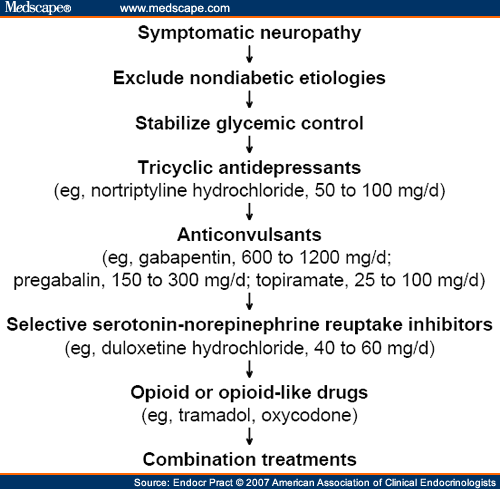
Today's article from an unknown author writing for opioids.co.uk (see link below)is not an easy read but one that definitely stimulates discussion. The writer is clearly someone with a deep scientific knowledge of how opioids work and his or her political agenda aside, he makes a powerful case for a more open-minded approach to using opiods in the treatment of pain. It's not as if it's a new drug source; it's been used for thousands of years but it is a controversial one because of the perceived dangers of addiction and substance abuse. Much like marijuana, the authorities both political and medical, seem to see it always as a potential threat to society, rather than an effective weapon in the fight to control severe pain. Of course, as many of you know, it's already widely used in the treatment of neuropathic symptoms but almost always as a last-resort measure, when all else has failed.
This article tries to show that opioids are not something to be feared but an age old pain suppressor that deserves much better research, so that it may be possible to use it at an earlier stage. After all, the anti-depressants and anti-convulsants which are generally prescribed first, are not without unpleasant side effects of their own and are very often ineffective. However, it's a real hot potato as far as the FDA in the States and most governments across the world are concerned. They seem to have a vision based in the 19th century of half the population living in a drug-induced stupor. Time to trust the people a little more maybe?


FUTURE OPIOIDS

THE BIRTH OF A NEW GENERATION

A significant minority of the population only feel truly well on opioids. In effect, they self-medicate, taking responsibility for their own mental health in defiance of medical orthodoxy.

It would indeed be extraordinary if - alone among the neurotransmitter systems of the brain - the endogenous opioid families were immune from dysfunction. Enkephalins are critical to "basal hedonic tone" i.e. whether we naturally feel happy or sad. Yet the therapeutic implications of a recognition that dysfunctional endogenous opioid systems underlie a spectrum of anxiety-disorders and depression are too radical - at present - for the medical establishment to contemplate. In consequence, the use of opioid-based pharmacotherapies for "psychological" pain is officially taboo. The unique efficacy of opioids in banishing mental distress is neglected. Their unrivalled efficacy in treating "physical" nociceptive pain is grudgingly accepted.

Later this century and beyond, however, the development of highly selective, site-specific designer drugs and innovative gene-therapies may enhance our native opioid function and revolutionise mental health. Therapeutic intervention targeted on the opioid pathways will potentially enrich the quality of life of even the nominally "well", not least because - by the more enlightened health standards of posterity - we may all be reckoned mentally ill.

Today, by contrast, immense energy is devoted by the authorities into persecuting "illicit" narcotic users. Many drug-"abusers" feel well thanks only to the "non-therapeutic" use of opioids. They are stigmatised, pilloried and criminalised in a futile War Against Drugs. In the "Inquisition against pleasure", victims of medically-sanctioned human-rights abuses - e.g. the hundreds of thousands of drug "offenders" incarcerated in the Amerikan gulag - are officially supposed to believe their malaise-ridden drug-naïve states were "normal", "natural" and mentally healthy. In the course of our ill-conceived Drug War, vast resources are dissipated by the state-apparatus in an effort to choke off narcotic production and supply. When these efforts are temporarily successful, drug-deprivation makes the habitual opioid user feel ill; [s]he "cold-turkeys" with characteristic irritability, anhedonia, depression, sickness behaviour and sometimes raw physical pain. The ill-effects felt from involuntary deprivation of opioids are taken to demonstrate the likely ill-effects of legalised access, a paradox that might be thought laboured were its human costs not so tragic.

When caught up in the criminal justice system, users may be pressured into taking opioid antagonists like naltrexone (Trexan). Such drugs can induce dysphoria and suicidal despair. At best, their use subtly diminishes the victim's capacity ever to feel well. Meanwhile Chinese military surgeons have developed (2003) a new treatment weapon against narcotic users: surgical destruction of the pleasure centres. Western doctors are said to be following these procedures with interest, but are more likely to achieve their functional equivalent by non-surgical means.

Even where it is acknowledged that many opioid users have a pre-existing anxiety or depressive disorder in urgent need of relief, those so afflicted are fobbed off with often third-rate psychotropics instead. For a start, the monoamine hypothesis of depression - and the new classes of drug it has spawned (SSRIs, NARIs, SNRIs, NaSSAs, RIMAs etc to complement the dirty old tricyclics and irreversible unselective MAOIs) - is radically incomplete. A minority of people, admittedly, find such drugs effective. Often taking a licensed antidepressant is better than nothing at all - perhaps in part because of their positive effects on endogenous opioid peptide release. Yet even in the context of controlled clinical trials with relatively high dosage-regimens and artificially good rates of patient-compliance, it's rare for response-rates to reach more than 70%. Rates of full remission of depressive symptoms are far lower, perhaps 25-30%. Out "in the field", the picture is worse still. Adverse side-effects are common. Response may take weeks. Withdrawal reactions can be unpleasant.

A recognition of the crucial role of dopamine, and selective dopamine reuptake blockers, in sub-types of depressive mood-disorders might push response and remission rates higher. The mesolimbic dopamine system is critical to vitality, motivation, libido and a capacity to anticipate reward. Dopaminergics can also act as analgesics. They can also reverse the apathetic sedation induced by some antidepressants and opioid agonists. Yet the FDA stymies the licensing of effective dopamine reuptake-blocking mood-brighteners at home; and applies pressure to deny access to them abroad. This is because of worries about their (sometimes) faster efficacy - and mild psychostimulant effect - raise the spectre of "abuse-potential"; and proscription, persecution and indiction are favoured over consumer education. For Big Brother knows best.

More controversially, adding customised opioids, enkephalinase-inhibitors and kappa-antagonists to our therapeutic armamentarium may prove critical to boosting response- and remission-rates towards 100% in the decades ahead. Crudely, whereas dopamine mediates "wanting", mu opioid agonists mediate "liking". Both systems can be fruitfully enhanced. Depressive and dysthymic people often suffer from a dysfunctional opioid system and anhedonia - an incapacity to experience pleasure. Sometimes orthodox "antidepressants" may even make them feel worse. Yet controlled clinical trials of designer narcotics for refractory and/or melancholic depression, let alone their use by "normal" people with "ordinary" mood-disorders, are not imminent.

So what is to be done? Even in the context of today's crude agents, would some of us be better off as legalised junkies?

No, usually not, at least in contemporary society. Self-medicating users with enough resources to maintain a regular supply may indeed find they can function as well as, or better than, their drug-naïve state. Popular mythology aside, users don't seek to escalate dosage indefinitely: both humans and laboratory monkeys with unlimited access tend slowly to increase injection-frequency until eventually they self-administer a stable and subjectively optimal amount of the drug. Most users take heroin, not primarily to stave off the abstinence syndrome, but because they find life on heroin better than their pain-ridden life without it. Yet the existence of a typical heroin addict in prohibitionist society can still be exceedingly unpleasant at times. Contemporary opioid drugs, natural and synthetic alike, are flawed. The problem is not the euphoric well-being they can induce - an ill-named "adverse side-effect" - but their tendency to induce a financially ruinous tolerance; perhaps insidiously to dull the intellect; trigger nausea; slow digestive processes; and sometimes induce a parodoxical hyperalgesia. Most seriously, when taken in acute excess, today's opioids can cause respiratory depression. This is a consequence of their stimulation of the mu-2 receptors in the medullary respiratory centres of the brain. These problems are exacerbated a thousandfold, however, by the illegal status of narcotics in contemporary society. Dosage, purity and regularity of supply cannot be guaranteed; prices are inflated; quality-control is negligible; good hygiene is difficult. Pharmacological education is non-existent, whereas it ought to be part of the core curriculum. Opioid users are frequently forced into crime to pay for pharmacotherapies that should be cheaply and safely available; and damned for seeking a state of mind which will one day be their birthright: invincible happiness.

To promote emotional superhealth both durably and effectively, designer-opioids must be synthesised that are also subjectively nicer, richer and cleaner than today's product-line. For one of our three major endogenous opioid families is implicated in profoundly dysphoric psychological effects: a cruel negative-feedback system exists between the mu and kappa systems that "corrects" any "excess" tendency to well-being. Thus dynorphin activity at the kappa receptors tonically inhibits the release of dopamine from the mesolimbic terminals. By contrast, the mu-opioid receptor selective endomorphins, especially endomorphin 1, are potent antidepressants: they enhance mu opioid receptor-mediated dopamine release in the nucleus accumbens. If our well-being is to be sustainably enhanced, the balance between the two opposing opioid systems must be shifted.

The role of the mu receptors appears to be crucial in another respect. Today, people vary hugely in their sensitivity to pain. This sensitivity is genetically regulated. Pain perception - and, conversely, emotional well-being - is closely linked to the number of neuronal mu receptors. This number is controlled by a single gene, the mu opioid receptor gene. Pain-sensitivity is diminished when the receptors are present in relative abundance. When the receptors are reduced in number or missing altogether, relatively minor noxious stimuli may be perceived as painful.

In the short-to-medium term, then, we need better-targeted opioids, safer and more site-specific than the present crop. Smarter opioids can potentially be combined with cholecystokinin antagonists (e.g. proglumide); nitric oxide (NO) synthase inhibitors; peroxynitrite-blockers; and also, perhaps, better-designed NMDA receptor antagonists - co-analgesics with potential antidepressant efficacy that inhibit the onset of tolerance. Although mu receptor agonists are the best analgesics and euphoriants, selective delta receptor agonists and enkephalinase inhibitors may prove clinically valuable antidepressants. The development of centrally active and more selective kappa antagonists - which block the endogenous excess production and reuptake of dynorphin underlying many depressive and anxiety disorders - is also a priority. Orally active JDTic, a potent, exceedingly long-acting selective kappa antagonist, is currently undergoing preclinical testing. Kappa Therapeutics, the world's first conference dedicated to the kappa opioid receptor, was held in Seattle July 2011. In the meantime, Buprenorphine (Buprenex, Temgesic, Subutex), for instance, is certainly no panacea; but it would probably benefit a far wider section of the population than its current restriction to use in "detoxifying" heroin-addicts. Its role as a mixed mu agonist reduces buprenorphine's addictive potential as a euphoriant while increasing its safety in overdose. Buprenorphine's kappa receptor antagonism may contribute to its superior efficacy as an antidepressant. Even the humble codeine analogue tramadol (Ultram), a selective partial mu agonist analgesic with noradrenaline and serotonin reuptake inhibiting properties, can serve as a useful mood-brightening stopgap. Weak but non-negligible kappa agonism limits its therapeutic benefit. But contemporary medico-legal opiophobia ensures such usage remains strictly off-label.

THE QUEST FOR A DRUG-FREE SOCIETY

In the longer-run, however, irrespective of how clever our pharmacological interventions may one day be, we'd arguably be better off taking no drugs at all. For if there were nothing fundamentally wrong with our default-state of consciousness, then we wouldn't now try so hard to change it. Thus our sophisticated descendants may opt instead to rewrite the vertebrate genome and allow themselves life-long genetically pre-programmed bliss. They may "naturally" be animated by gradients of well-being beyond the bounds of normal human experience as an everyday part of mental health.

Wouldn't lifelong happiness make us stagnate? No. In our genetically-enhanced post-human successors, the functional analogues of aversive experience can potentially perform an analogous functional role to mental and physical pain in our Darwinian past, but without its textures of phenomenal nastiness. Our descendants' enriched dopamine function will enhance their drive, energy and will-power, not just hedonic capacity. Thus outright abolitionism is not technically infeasible - just ideologically problematic.

Tomorrow's bioscientists face another challenge. Taken in excess, opioid-based drugs of today tend to dull consciousness, inducing a dreamy warm contentment. The name "narcotic" derives from the Greek word for stupor. Indeed smacked-out bliss is typically used as the archetype of what any drug-or-gene-underwritten chemical utopia would be like. Most notably, soma in Aldous Huxley's Brave New World is depicted as a cross between a non-addictive opioid and a hangover-less tranquilliser. Thus Huxley's utopians enjoy only an empty imbecilic happiness, not life-enriching peak experiences. Unlike dopaminergics, soma doesn't increase incentive-motivation, nor does it heighten the felt intensity of experience. You can use soma to drift off to sleep.

Yet this negative stereotype of synthetic bliss is profoundly misleading. Addictive tranquillity is only one option among many. It reflects a poverty in our conception of the range of options for paradise-engineering that biotechnology puts on offer. In reality, the quality of our consciousness can be intensified, sharpened and radically diversified by creative psychopharmacology. Intellect and empathy, and not just mood, can be prodigiously enhanced when the ideology of Better Living Through Chemistry finally enters mainstream culture.

Better still, when a wholesale genomic rewrite - and not just piecemeal genetic tinkering - unfolds in the millennium ahead, then any chemical manipulation of our descendants' emotionally- and intellectually-enriched superminds may be redundant. At most, lifestyle drugs will offer an optional fine-tuning for the parameters of their well-being - set against a backdrop of native-born bliss. In the wake of any such Post-Darwinian Transition, a wide variety of social interactions will "naturally" trigger a far richer endogenous opioid release than occurs today; and do so from a much higher baseline of emotional well-being.

However, our present restrictive definitions of mental illness, and the technical challenges posed by large-scale genetic-rewrites, make germline gene-therapy seem a pipe-dream for now. In the present era, lifetime pure dysthymia afflicts far too many people; and periods of "mild" anxiety, malaise and depressive episodes blight the lives of hundreds of millions more. Meanwhile countless victims of chronic pain-disorders are condemned to a life of needless suffering by institutionalized opiophobia. Victims of the most unspeakable, spirit-crushing neuropathic or central pain are liable to be fobbed off with pain-management courses - "helping you to manage your pain" - rather than given the potent pain-relief they deserve. For with a bit of creative psychopharmacology, both the tolerance and adverse side-effects of chronic opioid use are manageable even with today's crude agents. Thanks to tomorrow's biotechnology, the real obstacles to curing the nasty side of life are set to become doctrinal, not technical. Suffering of any kind is due to become optional. It remains to be seen how quickly the ideological baggage of the past can be overcome.

http://opioids.co.uk/

Sunday, July 2, 2017

EAT WILD TOMATOES FOR BETTER HEALTH


Scientists are looking at ways to develop tomatoes that have higher antioxidant traits, just like wild tomatoes that have such properties in abundance.
Wild tomato species have been used for improvement of tomato disease resistance but have not been extensively explored for health-related traits.
“Our work shows that wild tomato species harbour alleles that could be useful for improvement of antioxidant traits in cultivated tomato,” said professor Sami Doganlar from department of molecular biology and genetics at Izmir Institute of Technology in Turkey.
In fact, some of the backcross progeny from the populations used in this study could be used for breeding of these traits, Doganlar explained.
Their results can be used to design a breeding programme with the purpose of improving antioxidant characteristics in elite tomato lines.
The team analysed three different interspecific populations of wild tomatoes - solanum peruvianum, solanum habrochaites and solanam pimpinellifolium - for antioxidant and agronomic traits.
The wild species retain allelic (trait) diversity which is lost during domestication and breeding.
The study appeared in the journal HortScience.

Sunday, June 4, 2017

Carbamazepine Plus Morphine A Better Treatment For Neuropathy


Today's post from sciencedaily.com (see link below) looks at new attempts to combine two types of medication to produce a better result than using one on its own. In the current climate where opioids are receiving so much negative publicity and genuine chronic pain patients are suffering the backlash, this may be an attempt to lessen the impact of the opiate by combining it (in this case) with an epilepsy drug (carbamazepine) which is also often used to treat neuropathy in isolation. Over the years this returns to the headlines as an option but never really seems to have taken off and become first-line treatment. if the claims are as beneficial as is being stated, it may be worth talking to your doctor or specialist about.

Combining epilepsy drug, morphine can result in less pain, lower opioid doses
Date: September 15, 2014 Source: Indiana University
 

Summary:

Adding a common epilepsy drug to a morphine regimen can result in better pain control, fewer side effects and reduced morphine dosage, according to research. The result could bring significant relief to many patients with neuropathic pain, a difficult-to-treat condition often felt in the arms and legs and associated with nerve tissue damage.

Adding a common epilepsy drug to a morphine regimen can result in better pain control with fewer side effects. Moreover, the combination can reduce the dosage of the opioid needed to be effective, according to a team of pain researchers at Indiana University.

The result could bring significant relief to many patients with neuropathic pain, a difficult-to-treat condition often felt in the arms and legs and associated with nerve tissue damage.

"There is a huge unmet need for better treatments for neuropathic pain," said Fletcher A. White, Ph.D., the Vergil K. Stoelting Professor of Anesthesia at the Indiana University School of Medicine.

In laboratory tests using rodents, White and his colleagues found that while morphine lost its pain-relieving effectiveness three weeks after nerve injury, a combination therapy of morphine and carbamazepine -- used to prevent epileptic seizures -- could effectively reverse this loss of drug action. Their findings were reported in the journal PLOS ONE.

Although morphine and related opioid drugs are effective in treating pain, they can result in dependence and produce side effects including respiratory depression, nausea, constipation and other problems. In addition, such drugs can, paradoxically, actually cause pain, a condition called opioid-induced hyperalgesia.

"People immediately think, 'Oh, it's tolerance, the patient needs more of the drug for pain control,'" Dr. White said.

In fact, research indicates that the pain of hyperalgesia occurs because the morphine latches on not only to cellular targets that reduce pain sensation but to other "non-opioid" targets that result in activation of pain-sensing neurons. Dr. White and his colleagues had previously identified a key cellular factor -- known to be a specific voltage-gated sodium ion channel -- involved in that non-opioid process of pain nerve stimulation. Meanwhile another IU School of Medicine researcher, Theodore Cummins, Ph.D., professor of pharmacology and toxicology, had previously determined that carbamazepine alone has the opposite effect on the same ion channel.

Combining the two drugs could prevent the escalating doses of opioids that are sometimes prescribed to provide pain relief in the clinic.

"We know that opioids have benefits," Dr. White said. "If we can diminish the off-target effects, that's good. If we can diminish the opioid dosages required for pain relief, then you've really got something."

Because both drugs are approved for use by the Food and Drug Administration, physicians have tested the combination with patients, resulting in anecdotal reports of significantly improved pain management, Dr. White said. More formally, Dr. White and physician-researchers have begun testing the combination of morphine and a close relative of carbamazepine with patients in a small clinical trial at the Indiana University Melvin and Bren Simon Cancer Center.

In addition to Dr. White, researchers contributing to the study were Michael R. Due, Xiao-Fang Yang, Yohance M. Allette, Aaron L. Randolph, Matthew S. Ripsch, Sarah M. Wilson and Erik T. Dustrude of the IU School of Medicine; and Rajesh Khanna of the College of Medicine, University of Arizona.

The research was funded by National Institutes of Health grants NIDDK DK100905 and NIDA DA026040 and the Indiana Spinal Cord and Brain Injury Research Fund.

Story Source:

The above story is based on materials provided by Indiana University. Note: Materials may be edited for content and length.

Journal Reference:
Michael R. Due, Xiao-Fang Yang, Yohance M. Allette, Aaron L. Randolph, Matthew S. Ripsch, Sarah M. Wilson, Erik T. Dustrude, Rajesh Khanna, Fletcher A. White. Carbamazepine Potentiates the Effectiveness of Morphine in a Rodent Model of Neuropathic Pain. PLoS ONE, 2014; 9 (9): e107399 DOI: 10.1371/journal.pone.0107399 


http://www.sciencedaily.com/releases/2014/09/140915153613.htm