Showing posts with label OF. Show all posts

Sunday, September 3, 2017

Is Inflammation A Chief Cause Of Chronic Pain


Today's post from ufhealth.org (see link below) talks about the effect of inflammation on older pain patients and this includes people living with nerve damage. The link between neuropathy, auto-immune disease and inflammation is often hinted at but rarely confirmed, yet neuropathy is very often the result of inflammation and damage to the nervous system. This article talks about the fact that older people are more prone to and more often suffer from severe inflammation, leading to more and longer lasting pain. It suggests that anti-inflammatory drugs may be the answer but these are rarely on the list of recommended medications for neuropathy patients. It's a chicken and egg question: does the pain cause the inflammation, or the inflammation cause the pain? Inflammation is more often associated with tissue damage than nerve cells but inflammation in the nervous system most definitely can cause chronic pain (ask any shingles sufferer!) An interesting article requiring more research if you're interested. It may also be worthwhile asking your neurologist whether anti-inflammatory drugs such as diclofenac may be of benefit to you, although they do carry the potential for side-effects of their own.

Study shows pain causes older adults to develop more inflammation over a longer period of time 
Published: May 4, 2016 By: Morgan Sherburne 

When older relatives complain about their pains, show a little empathy, because new research suggests that as we age, we may all become more sensitive to pain. A small, preliminary University of Florida Health study has suggested for the first time that inflammation may occur more quickly and at a higher magnitude — and stays around longer — when older adults experience pain versus when younger adults experience pain.

This could mean that older adults could be at risk for developing chronic pain and may benefit from taking anti-inflammatories soon after an injury or procedure, according to the researchers.

Older adults often have a certain level of chronic inflammation in their bodies. But UF researchers found that when they induced pain in older adults, proteins associated with inflammation increased more than they did in younger participants and stayed in the bodies of older adults longer. The researchers also found that anti-inflammatory cytokines, proteins that soothe inflammation, peaked later for older adults than younger adults. Their results were published in a previous issue of Experimental Gerontology.

“Older people go through painful procedures more often, and we wanted to research whether this accumulation of painful procedures or more acute pain episodes that older people encounter is bad,” said Yenisel Cruz-Almeida, Ph.D., MSPH, an assistant professor in the UF College of Medicine’s department of aging and geriatric research who also is affiliated with the UF Institute on Aging. “If you have enough of those in a shorter period of time, does this predispose you to have chronic pain?”

When older adults have this kind of elevated inflammatory response, they’re more likely to have pain generated in the periphery of the body — their tissue and limbs outside of the spinal cord and brain, said the study’s senior author Joseph Riley, Ph.D., director of the pain clinical research unit in the UF Pain Research and Intervention Center of Excellence.

“If older adults are more likely to have these pain messages sent through the spinal cord to the brain, and the nervous system is being adapted to go through these changes, they may become more pain prone,” said Riley, also a professor in the UF College of Dentistry’s department of community dentistry and the UF College of Public Health and Health Professions’ department of clinical and health psychology.While the study does not establish whether accumulation of acute pain predisposes older adults to chronic pain, the researchers say their findings suggest this is a possibility, and it’s the first step in pain research to further understand the relationship between pain and aging. The researchers said the study’s sample size, though small, was more than adequate to demonstrate large differences between the older and younger adults they tested. The differences in inflammation within each group varied very little compared with the overall difference between the two groups, which suggests the populations they sampled were very different and there was little chance of sampling error, Riley said.

Cruz-Almeida and Riley studied eight healthy older adults, whose average age was 68, and nine healthy younger adults, whose average age was 21. None of the participants had illnesses such as diabetes or hypertension. During an initial visit, researchers induced pain in the participants in two ways, either using heat applied to the feet or a cold ice bath.

The first session determined how sensitive the participants were to pain. Determining a tolerable temperature allowed the researchers to recreate the same amount of pain for each participant in the subsequent sessions.

Participants rated their pain on a scale from 1 to 10. The researchers were aiming to induce pain to a Level 4 — a level that created the painful stimuli the researchers needed, but didn’t dissuade the participants from returning for the other visits required in the study.
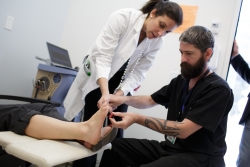


With a thermode — a device that looks like a microphone with a copper tip — the UF researchers applied heat to the feet of participants in a study that tested the inflammatory response to pain of older adults versus younger adults.To study inflammation in the blood, the scientists inserted a catheter into each participant before inducing pain. That allowed them to collect the participant’s blood before the pain stimulus and then at three, 15, 30, 45, 60 and 90 minutes after the stimulus. These blood samples allowed the researchers to study inflammatory markers in the blood, finding that older adults had higher levels of inflammation when pain was induced than the younger adults.

Riley said activation of the immune system and increased inflammation are not necessarily harmful, but it’s important to understand how the length of time the immune system is activated affects the body.

“We think that the longer you have the immune system activated, having these elevated inflammatory cytokines, the more this activation can alter the homeostasis of the body. Usually an imbalance like that can be associated with autoimmune disorders, which also increase with age,” Cruz-Almeida said. “But the truth is we don’t know what the direct implications would be. We think low-grade inflammation is related to endocrine abnormalities such as diabetes and the development of heart problems. … We need to keep looking and doing future research.”

Riley said immediate implications of the research for patients could be to attack pain quickly with anti-inflammatory medication.

“Early treatment of an injury even with over-the-counter anti-inflammatories may be a good idea,” Riley said. “It’s those first few days of bombarding the central nervous system with pain signals that has a bigger effect (on the body).”
About the Author

Morgan Sherburne


Science writer for UF Health. Morgan writes about the research of faculty physicians in the College of Medicine. She joined the UF Health staff in 2014. A Michigan native, she...Read More

https://ufhealth.org/news/2016/study-shows-pain-causes-older-adults-develop-more-inflammation-over-longer-period-time

Saturday, September 2, 2017

The Many Ills of Peripheral Nerve Damage


This article is from the New York Times science section (see link below)and it gives a very good overview of neuropathy as a disease. There may be something here that you don't already know.

PERSONAL HEALTH; The Many Ills of Peripheral Nerve Damage
By JANE E. BRODY
Published: October 20, 2009


If you have ever slept on an arm and awakened with a ''dead'' hand, or sat too long with your legs crossed and had your foot fall asleep, you have some inkling of what many people with peripheral neuropathy experience day in and day out, often with no relief in sight.

And numbness and tingling are hardly the worst symptoms of this highly variable condition, which involves damage to one or more of the myriad nerves outside the brain and spinal cord. Effects may include disabling pain, stinging, swelling, burning, itching, muscle weakness, twitching, loss of sensation, hypersensitivity to touch, lack of coordination, difficulty breathing, digestive disorders, dizziness, impotence, incontinence, and even paralysis and death.

I realize now that I had a mild, reversible bout of peripheral neuropathy several decades ago when a misplaced shot of morphine damaged a sensory nerve in my thigh. It took three years for the nerve to recover, and for much of that time I could not tolerate anything brushing against my leg.

One of my sons, too, was afflicted when a nerve behind his knee was injured during a basketball game. He had no feeling or mobility in his foot for nine months, but after several years the nerve healed and he regained full use of his foot.

And a good friend was nearly paralyzed, also temporarily, following a flu shot, by a far more serious form of peripheral neuropathy -- an autoimmune affliction called Guillain-Barré syndrome, in which one's own antibodies attack the myelin sheath that protects nerves throughout the body.

There are hundreds of forms of peripheral neuropathy. A medical guide describing them, compiled by a team of neurologists at the behest of the Neuropathy Association, fills a booklet the size of a two-year wall calendar.

The association, which sponsors research and provides education and support for patients and families dealing with peripheral neuropathy, estimates that the disorder afflicts more than 20 million Americans at any given time. If the cause can be corrected, peripheral nerves can regenerate slowly and patients can recover, although not always completely.

But many people never recover. They must learn to live with the disorder, with the help of treatments and devices that can ease their discomfort and disability. With such a wide array of symptoms and causes, getting a correct diagnosis is often a challenge. Worse, frustrated patients are sometimes told, ''It's all in your head.''

Causes Behind an Ailment

There are three types of peripheral nerves: sensory nerves, which transmit sensations like pain, touch, heat and cold; motor nerves, which control the action of muscles throughout the body; and autonomic nerves, which regulate functions that are not under conscious control, like blood pressure, digestion and heart rate. Symptoms of neuropathy depend on what nerves are involved.

Someone with damaged sensory nerves might not feel heat, for example, and could be scalded by an overly hot bath. Neuropathy of the motor nerves can result in weakness, lack of coordination or paralysis; neuropathy of the autonomic nerves can lead to high blood pressure, irregular heart rate, diarrhea or constipation, impotence and incontinence.

The list of possible causes of neuropathy is far too long for this column. They include inherited conditions like Charcot-Marie-Tooth disease; infections or inflammatory disorders like hepatitis, Lyme disease, AIDS, rheumatoid arthritis and lupus; organ diseases like diabetes, hypothyroidism and kidney disease; exposure to toxic substances like industrial solvents, heavy metals, sniffed glue and some cancer drugs; trauma to or pressure on a nerve from an injury, cast, crutches, abnormal body position, repetitive motion (as in carpal tunnel syndrome), tumor or abnormal bone growth; alcoholism; and deficiency of vitamin B12.

The most common cause, accounting for nearly a third of neuropathy cases, is diabetes, especially among those whose blood sugar levels are poorly controlled. Half of all people with diabetes eventually begin to lose sensation and develop pain and sometimes weakness in their feet and hands. In people with diabetes, even minor injuries to the feet, if not quickly and properly treated, can result in gangrene and amputations.

In nearly a third of cases, no cause is ever found, leaving patients with no other recourse than treatment of their symptoms.

Suspected cases are best referred to a neurologist, who should begin by taking a complete personal and family medical history and performing a physical and neurological examination, checking on reflexes, muscle strength and tone, sensations, balance and coordination.

A complete workup is likely to include blood tests, urinalysis, a nerve conduction study and electronic measurements of muscle activity. Imaging studies, like a CT scan or an M.R.I., may reveal a tumor, vertebral damage or abnormal bone growth. In some cases, a nerve or muscle biopsy may be done.

Relief and Restoration

If the underlying cause cannot be corrected, the goals of treatment are relief of symptoms and restoration of lost functions. Pain control is paramount. Effective relief may come from over-the-counter remedies or a lidocaine patch but sometimes requires prescribed opiates.

Many with neuropathic pain have benefited from drugs licensed for other uses, including antiseizure medications like gabapentin, topiramate (Topamax) and pregabalin (Lyrica) and antidepressants like the tricyclic amitriptyline and the selective serotonin and norepinephrine reuptake inhibitor duloxetine (Cymbalta).Vitamin B12 deficiency can be treated with supplements and fortified cereals or by judicious consumption of meats, poultry, fish, eggs and dairy products.

And since alcohol and tobacco are particularly risky for people with neuropathy, or a health problem that predisposes them to it, they have every reason to quit smoking and to drink only in moderation.

Many patients are helped by physical therapy, occupational therapy and devices like braces, splints and wheelchairs. Railings on stairways and in the bathroom, elimination of tripping hazards like scatter rugs, and improved lighting (including night-lights) can reduce the risk of falls. For those insensitive to heat, a thermometer should be used to test water in a tub, shower or sink. Orthopedic shoes are invaluable to patients with lost sensitivity in their feet or impaired balance.

A variety of mechanical aids can make it easier to live with peripheral neuropathy, among them kitchen tools made by Oxo. Those with digestive problems might try eating small frequent meals and sleeping with their heads elevated.


http://query.nytimes.com/gst/fullpage.html?res=9404E4D6123DF933A15753C1A96F9C8B63&pagewanted=all

Friday, September 1, 2017

When Neuropathy Deprives You Of Sleep


Today's post from neuropathyjournal.org (see link below) talks about the much-underestimated problem of fatigue associated with neuropathy. Let's assume that your neuropathy was caused by another condition, or you are suffering from another condition anyway - the chances are that fatigue will play a part in those symptoms anyway. Add to that your nerve damage and muscular weakness and you have serious tiredness on a daily basis. It's not fair folks and other people may look at you as if you're malingering but it's the way it is and one of Lt.Col. Richardson's best pieces of advice in this article is to ignore them; accept the state of your body as being what it is and...go take a nap if you need it.
It may also be worth mentioning that we're entering holiday periods across the world and the strains on your body and mind can be considerably greater. Listen to your body and rest when it all gets a bit too much - you'll thank yourself later and others may also benefit from a rested you too😉


Fatigue in Peripheral Neuropathy
By LtCol Eugene B Richardson, USA (Retired) BA, MDiv, EdM

Unfortunately fatigue is a central part of many neuropathies and especially the immune mediated neuropathies. It is central to many other chronic illnesses that affect the body’s immune system. The causes are often complex and many.

Dr. Scott Berman, in his book Coping with Chronic Neuropathy notes in chapter VIII “Dealing with Fatigue and Insomnia” that this symptom is one of the most difficult and challenging for the neuropathy patient. Dr. Berman is a Psychiatrist, a member of the Board of Directors of the NSN and a Medical Advisor. Scott lives with untreatable CIDP.

He notes:

…that in one study looking at fatigue in autoimmune neuropathy 80% of 113 patients had severe fatigue. The fatigue was independent of motor or sensory symptoms and was rated as one of the top three most disabling symptoms. (“Fatigue in Immune-Mediated Polyneuropathies,” Neurology 53: 8 November 1999, I.S.J. Merkies, et al).


For decades in living with untreated Chronic Inflammatory Demyelinating Polyneuropathy (CIDP), Autonomic Neuropathy (AN) and Progressive Polyneuropathy due to exposure to Agent Orange in Vietnam, I can attest to the facts noted above. While other major symptoms respond to treatment with Immune Globulin (IVIg), the symptom of severe fatigue continues as one of the symptoms that responds only temporarily to the infusions followed by several days of total fatigue following infusion and then with some lessening until the next infusion.

Dr. Norman Latov in his book “Coping with Peripheral Neuropathy”, states what I have heard other neurologists share, that the fatigue we feel, first appearing as weakness, increases as the weakness (or damage) of motor nerves expands. At this point with only a few muscles doing the whole job of lifting a leg or arm or carrying on autonomic functions, the body becomes weak and eventually extreme fatigue occurs. Think of a young child who tires easily because the muscles and nerves are not fully developed and only a few underdeveloped nerves or muscles are doing the job of moving!

On the other hand, to state the obvious, pain in some neuropathies does not help us sleep. Neuropathy patients must seek medical help in finding medications or other options which works for them. The medical practitioners have increased their knowledge in recognizing the reality of neuropathic pain. These strange symptoms from damaged peripheral nerves are present in sensory neuropathies. It is become less common for these patients to be told that it is all in their ‘head’ and are finally getting the help they need.

UPDATE ON FATIGUE IF YOU ARE ON IVIG (September 28, 2016):

Learned something else with my infusion yesterday. I got talked into getting 50 or 60 grams and could not figure out why I had such increase in fatigue, both physical and mental , when I was getting this dosage as they told me that was the dose for my weight. I forgot my line that ‘my body has not read your book” and discovered it was the excess IVIg! Yesterday I had my doctor reduce my dosage to the 40 grams which I was getting previously, and wow…. less fatigue etc…. even the day after. I have had the fatigue explained away in a number of ways, and fatigue is common in chronic illness, but then yesterday I read the brochure again that came from Gammagard. Guess what is NOW listed at top of the reactions? Fatigue and malaise!!!! I am considered going down to 30grams and see if that is even better. The point here is that each of our bodies are different an the brands of IVIg are different! Fatigue is a complex subject and deserves more research and attention as this as many have stated is one of the worst symptoms of many Peripheral Neuropathies.

Impact on family and friends:

Families and friends, as we all have learned, may not understand this reality since we “look so good” and may even believe/suggest that you are just lazy or unmotivated or worse. The best thing you can do for them is to have them watch the DVD Coping with Chronic Neuropathy which will be an education about the impact of any neuropathy on our lives.

Educating yourself about neuropathy:

At any rate, fatigue is something we struggle with every day and often regulates/determines our daily activities.

While fatigue in neuropathy and other chronic illnesses is not fully understood by the experts, from a practical standpoint, here is what I have learned to do or not do in coping with fatigue. If you have found other things that help, send us a message and we will add it to the list.

1. DO NOT think negatively about fatigue, thus feeling guilty about your fatigue. Go take a nap! (See DVD “Coping with Chronic Neuropathy”).

2. Learn when your “fatigue” periods occur, as these often establish a pattern at certain times of the day. Then go lay down and stop moaning about it, as it is what it is until it isn’t.

3. I have learned that you do not even have to actually “sleep”, but just allowing your body to rest/stop for an hour takes care of the exhaustion as the body recovers. But whatever works for you, do it without guilt or apology.

4. For nighttime, have a standard bedtime routine in preparing for sleep that tells your body that it is time to sleep.

5. Do not eat a large meal just before bedtime or take a stimulant that keeps you awake or might interfere with sound sleep (i.e. caffeine, for some alcohol).

6. Do consider drinking a glass of milk as for many this encourages the body to sleep.

7. Do consider one of those special recordings of quiet music or rain falling or similar if it helps.

8. Do consider using a ticking clock if that helps. As a child in the 40s I got my best sleep on the floor in front of the big radio in the living room listening to Dragnet or was it the Lone Ranger, maybe the Big Story. Today most TV programs have the same effect, sleep! Pun intended.

9. Muscle spasms and/or restless leg can make sleeping difficult and rob you of needed sleep. Speak to your doctor and have tests done for calcium, salt, potassium levels and other deficiencies which can make it difficult for muscles to work properly. This is especially true if you are on a diuretic which can empty your body of needed minerals. Getting up and having a glass of orange juice worked for my mother and works for me. If the lack of something is not the problem, have the doctor find out what may be causing these muscle problems. There are also medications to help prevent these muscle spasms and cramps for they are very common in neuropathy.

10. I have found that if I wake up with my mind creating solutions to an issue or writing poetry (happens) and not able to sleep, I go to another room or go do some work on my computer (write out the solution or poetry) until I begin to feel sleepy again. It works for me.

11. For some insomnia is a real curse. There are medications that one can use as Dr. Scott Berman mentions in his book, so speak to your doctor. Frankly, I would work on natural solutions first and be creative to see what works for you. But if ALL else fails these medications may help and be a heaven sent blessing.

12. My Nurse told me that many patients with this effect of a chronic illness, take Folic Acid and it is known to help. So you many want to speak to your doctor in this regard.

13. Dr. Erika Schwartz, M.D. (national leading expert on wellness) suggests that patients with extreme fatigue have the physician check your basal metabolic rate and your thyroid function. Low thyroid is a common cause of fatigue. So speak to your doctor in this regard.

14. So what do you do or not do that helps? Send it to us and we will enter it here!

DISCLAIMER: The information in this article and on the website or the links or in the guidance provided is intended to be educational and informative and not medically prescriptive or diagnostic. All patients are encouraged to consult with their own medical doctor when considering any this information.

Copyright – 2014-2015 Network for Neuropathy Support, Inc., 501c3, dba as Neuropathy Support Network. This article or its contents may be reprinted or published for educational purposes as long as the printing or publishing is not for profit and acknowledgement is granted the author.

https://www.neuropathyjournal.org/fatigue-in-peripheral-neuropathy/

Thursday, August 31, 2017

ANTIBIOTICS GIVE RISE TO NEW COMMUNITIES OF HARMFUL BACTERIA


Most people have taken an antibiotic to treat a bacterial infection. Now researchers from the University of North Carolina at Chapel Hill and the University of San Diego, La Jolla, reveal that the way we often think about antibiotics -- as straightforward killing machines -- needs to be revised.

 The work, led by Elizabeth Shank, an assistant professor of biology in the UNC-Chapel Hill College of Arts and Sciences as well as microbiology and immunology in the UNC-Chapel Hill School of Medicine, and Rachel Bleich, a graduate student in the UNC-Chapel Hill Eshelman School of Pharmacy, not only adds a new dimension to how we treat infections, but also might change our understanding of why bacteria produce antibiotics in the first place.
"For a long time we've thought that bacteria make antibiotics for the same reasons that we love them -- because they kill other bacteria," said Shank, whose work appears in the February 23 Early Edition of the Proceedings of the National Academy of Sciences. "However, we've also known that antibiotics can sometimes have pesky side-effects, like stimulating biofilm formation."
Shank and her team now show that this side-effect -- the production of biofilms -- is not a side-effect after all, suggesting that bacteria may have evolved to produce antibiotics in order to produce biofilms and not only for their killing abilities.
Biofilms are communities of bacteria that form on surfaces, a phenomenon dentists usually refer to as plaque. Biofilms are everywhere. In many cases, biofilms can be beneficial, such as when they protect plant roots from pathogens. But they can also harm, for instance when they form on medical catheters or feeding tubes in patients, causing disease.
"It was never that surprising that many bacteria form biofilms in response to antibiotics: it helps them survive an attack. But it's always been thought that this was a general stress response, a kind of non-specific side-effect of antibiotics. Our findings indicate that this isn't true. We've discovered an antibiotic that very specifically activates biofilm formation, and does so in a way that has nothing to do with its ability to kill."
Shank and her team previously reported that the soil bacterium Bacillus cereus could stimulate the bacterium Bacillus subtilis to form a biofilm in response to an unknown secreted signal. B. subtilis is found in soil and the gastrointestinal tract of humans.
Using imaging mass spectrometry, they subsequently identified the signaling compound that induced biofilm production as thiocillin, a member of a class of antibiotics called thiazolyl peptide antibiotics, which are produced by a range of bacteria.
At that point, Shank and her colleagues knew thiocillin had two very specific and different functions, but they didn't know why -- and wanted to know how it worked. That's when they modified thiocillin's structure in a way that eliminated thiocillin's antibiotic activity, but did not halt biofilm production.
"That suggests that antibiotics can independently and simultaneously induce potentially dangerous biofilm formation in other bacteria and that these activities may be acting through specific signaling pathways," said Shank. "It has generated further discussion about the evolution of antibiotic activity, and the fact that some antibiotics being used therapeutically may induce biofilm formation in a strong and specific way, which has broad implications for human health."

Wednesday, August 30, 2017

Signs Of Ectopic Pregnancy


Ectopic Pregnancy

Ectopic Pregnancy


Ectopic Pregnancy. Ectopic pregnancy is a complication in pregnancy where the baby medically defined as an embryo implants outside the uterus. 1 of pregnancies .Mirena Ectopic Pregnancy. Mirena is a small intrauterine device IUD that is used for contraception in women. Mirena is currently suggested for women who have .The presence or absence of an intrauterine pregnancy must first be determined ; Discriminatory levels: Endovaginally a normal pregnancy should be seen when b hCG .An early ectopic pregnancy often feels like a normal pregnancy. A woman with an ectopic pregnancy may experience common signs of early pregnancy..Ectopic pregnancy occurs when the fetus starts growing outside of the uterus. Ectopic pregnancy is mostly found in fallopian tube or some where else in the.Ectopic pregnancy, also known as eccyesis or tubal pregnancy, is a complication of pregnancy in which the embryo attaches outside the uterus. Signs and symptoms .Doctors help you with trusted information about Pregnancy in Ectopic Pregnancy: Dr. Honore on very early signs of ectopic pregnancy: But ultrasound may solve this .Ectopic pregnancy tubal pregnancy early signs and symptoms include lack of menstrual period, vaginal bleeding, and abdominal pain. Watchful waiting, medications .Three classic signs and symptoms of an ectopic pregnancy What are other signs and symptoms of an ectopic pregnancy?.An ectopic pregnancy occurs when a fertilized egg implants outside of the uterus or not within the uterine cavity..


Ectopic Pregnancy Symptoms And Signs

Ectopic Pregnancy Symptoms And Signs

Ectopic Pregnancy Symptoms

Ectopic Pregnancy Symptoms


Ectopic pregnancy tubal pregnancy early signs and symptoms include lack of menstrual period, vaginal bleeding, and abdominal pain. Watchful waiting, medications .Ectopic pregnancy occurs when the fetus starts growing outside of the uterus. Ectopic pregnancy is mostly found in fallopian tube or some where else in the.An early ectopic pregnancy often feels like a normal pregnancy. A woman with an ectopic pregnancy may experience common signs of early pregnancy..Ectopic Pregnancy. Ectopic pregnancy is a complication in pregnancy where the baby medically defined as an embryo implants outside the uterus. 1 of pregnancies . Ectopic pregnancy, also known as eccyesis or tubal pregnancy, is a complication of pregnancy in which the embryo attaches outside the uterus. Signs . Three classic signs and symptoms of an ectopic pregnancy What are other signs and symptoms of an ectopic pregnancy?. Mirena Ectopic Pregnancy. Mirena is a small intrauterine device IUD that is used for contraception in women. Mirena is currently suggested for women who .Doctors help you with trusted information about Pregnancy in Ectopic Pregnancy: Dr. Honore on very early signs of ectopic pregnancy: But ultrasound may solve this . An ectopic pregnancy occurs when a fertilized egg implants outside of the uterus or not within the uterine cavity..The presence or absence of an intrauterine pregnancy must first be determined ; Discriminatory levels: Endovaginally a normal pregnancy should be seen when b hCG .


Chance Of Pregnancy


Ultrasound At 9 Weeks Pregnant

Ultrasound At 9 Weeks Pregnant


10 Ways to Boost Your Odds of Getting Pregnant These healthy habits can increase your chance of getting pregnant..Your chances of getting pregnant each month depend on many factors such as your age, your weight, and how long you have been trying to get pregnant..Boost Your Chances of Getting Pregnant. More on getting pregnant. Adoption and Surrogacy; Boost Your Chances of Getting Pregnant; Deciding to Have a Baby;.Individually, your chances of getting pregnant are about 20 in any given month. Research suggests that out of 100 couples having regular, unprotected:.The Am I Pregnant Quiz. This test should never be used to replace a home or blood pregnancy test. If you want to know if you are pregnant, you MUST take a pregnancy test..Your Chances of Getting Pregnant, there's little chance your man's sperm will actually have any eggs to work with during this phase of your cycle. .Risk of Pregnancy. What is my risk of getting pregnant if I have without using contraception or my birth control fails? Almost any time you have without using .1 Answer - Posted in: plan b, pregnancy,, emergency contraception - Answer: You're wrong about thinking you're safe if you pee before, or ..: What are the chances? The simplest way to estimate the chance of pregnancy was to consider only cycles in which there had been only one act of intercourse..Trying for a baby? Take this WebMD quiz to learn how to boost your chances of getting pregnant: when and how often to have, whether position matters, and what not .


Ultrasound At 9 Weeks Pregnant

Ultrasound At 9 Weeks Pregnant

Pregnant Woman Birth

Pregnant Woman Birth


TODAY Parents is the premiere destination for parenting news, advice community. Find the latest parenting trends and tips for your kids and family on TODAY.com..Medical news and health news headlines posted throughout the day, every day.The March of Dimes funds lifesaving research and programs and works to end premature birth, birth defects and infant mortality. Every baby deserves a healthy start..Lilypie Baby Days are free custom ticker graphics that update each day to display your child's age, or how far along your pregnancy is. There are Pregnancy, Birthday . Target has perfected the technique ofyzing consumers' shopping habits to figure out who's pregnant. How can they send customers congratulatory .Printables, coloring pages, recipes, crafts, and more from your child's favorite Nickelodeon and Nick Jr. shows.. "We knew that if we could identify them in their second trimester, there's a good chance we could capture them for years," Pole told me. "As soon .Content provided on this site is for entertainment or informational purposes only and should not be construed as medical or health, safety, legal or financial advice..Timely and easy-to-read articles for consumers covering FDA regulated products..Others Concerned About the .ual Transmission of Zika. Anyone not concerned about pregnancy who wants to avoid getting or passing Zika during can use condoms .


Tuesday, August 29, 2017

Effects of Peripheral Neuropathy


This article by Jane E Brody, from the New York Times, via an Indian newspaper, The Deccan Herald (see link below), is another general description of how neuropathy affects most people but as every article of this sort approaches it from a slightly different angle and uses various different examples and resources, they all add to our knowledge of how the disease works. It's important in all these generalised descriptions of neuropathy to be able to recognise yourself somewhere in them, so while the one may seem less relevant to your situation, the other hits the nail right on the head.

Devastating effects of peripheral neuropathy
By Jane E Brody

Damage to one or more of the myriad nerves can cause disabling pain or even paralysis

If you have ever slept on an arm and awakened with a ‘dead’ hand, or sat too long with your legs crossed and had your foot fall asleep, you have some inkling of what many people with peripheral neuropathy experience day in and day out, often with no relief in sight.
And numbness and tingling are hardly the worst symptoms of this highly variable condition, which involves damage to one or more of the myriad nerves outside the brain and spinal cord. Effects may include disabling pain, stinging, swelling, burning, itching, muscle weakness, twitching, loss of sensation, hypersensitivity to touch, lack of coordination, difficulty breathing, digestive disorders, dizziness, impotence, incontinence, and even paralysis and death.
I realise now that I had a mild, reversible bout of peripheral neuropathy several decades ago when a misplaced shot of morphine damaged a sensory nerve in my thigh. It took three years for the nerve to recover, and for much of that time I could not tolerate anything brushing against my leg.

One of my sons, too, was afflicted when a nerve behind his knee was injured during a basketball game. He had no feeling or mobility in his foot for nine months, but after several years the nerve healed and he regained full use of his foot.

And a good friend was nearly paralysed, also temporarily, following a flu shot, by a far more serious form of peripheral neuropathy — an autoimmune affliction called Guillain-Barre syndrome, in which one’s own antibodies attack the myelin sheath that protects nerves throughout the body.

There are hundreds of forms of peripheral neuropathy. A medical guide describing them, compiled by a team of neurologists at the behest of the Neuropathy Association, fills a booklet the size of a two-year wall calendar.

The association, which sponsors research and provides education and support for patients and families dealing with peripheral neuropathy, estimates that the disorder afflicts more than 20 million Americans at any given time. If the cause can be corrected, peripheral nerves can regenerate slowly and patients can recover, although not always completely.
But many people never recover. They must learn to live with the disorder, with the help of treatments and devices that can ease their discomfort and disability. With such a wide array of symptoms and causes, getting a correct diagnosis is often a challenge. Worse, frustrated patients are sometimes told, “It’s all in your head.”

Causes behind ailment
There are three types of peripheral nerves: sensory nerves, which transmit sensations like pain, touch, heat and cold; motor nerves, which control the action of muscles throughout the body; and autonomic nerves, which regulate functions that are not under conscious control, like blood pressure, digestion and heart rate. Symptoms of neuropathy depend on what nerves are involved.

Someone with damaged sensory nerves might not feel heat, for example, and could be scalded by an overly hot bath. Neuropathy of the motor nerves can result in weakness, lack of coordination or paralysis; neuropathy of the autonomic nerves can lead to high blood pressure, irregular heart rate, diarrhea or constipation, impotence and incontinence.
The list of possible causes of neuropathy is far too long for this column. They include inherited conditions like Charcot-Marie-Tooth disease; infections or inflammatory disorders like hepatitis, Lyme disease, AIDS, rheumatoid arthritis and lupus; organ diseases like diabetes, hypothyroidism and kidney disease; exposure to toxic substances like industrial solvents, heavy metals, sniffed glue and some cancer drugs; trauma to or pressure on a nerve from an injury, cast, crutches, abnormal body position, repetitive motion, tumour or abnormal bone growth; alcoholism; and deficiency of vitamin B12.

The most common cause, accounting for nearly a third of neuropathy cases, is diabetes, especially among those whose blood sugar levels are poorly controlled. Half of all people with diabetes eventually begin to lose sensation and develop pain and sometimes weakness in their feet and hands. In people with diabetes, even minor injuries to the feet, if not quickly and properly treated, can result in gangrene and amputations.
In nearly a third of cases, no cause is ever found, leaving patients with no other recourse than treatment of their symptoms.

Suspected cases are best referred to a neurologist, who should begin by taking a complete personal and family medical history and performing a physical and neurological examination, checking on reflexes, muscle strength and tone, sensations, balance and coordination.
A complete workup is likely to include blood tests, urinalysis, a nerve conduction study and electronic measurements of muscle activity. Imaging studies, like a CT scan or an MRI, may reveal a tumour, vertebral damage or abnormal bone growth. In some cases, a nerve or muscle biopsy may be done.

Relief and restoration
If the underlying cause cannot be corrected, the goals of treatment are relief of symptoms and restoration of lost functions. Pain control is paramount. Effective relief may come from over-the-counter remedies or a lidocaine patch but sometimes requires prescribed opiates.
Many with neuropathic pain have benefited from drugs licensed for other uses, including antiseizure medications like gabapentin, topiramate (Topamax) and pregabalin (Lyrica) and antidepressants like the tricyclic amitriptyline and the selective serotonin and norepinephrine reuptake inhibitor duloxetine (Cymbalta). Vitamin B12 deficiency can be treated with supplements and fortified cereals or by judicious consumption of meats, poultry, fish, eggs and dairy products.

And since alcohol and tobacco are particularly risky for people with neuropathy, or a health problem that predisposes them to it, they have every reason to quit smoking and to drink only in moderation.
Many patients are helped by physical therapy, occupational therapy and devices like braces, splints and wheelchairs. Railings on stairways and in the bathroom, elimination of tripping hazards like scatter rugs, and improved lighting (including night-lights) can reduce the risk of falls. For those insensitive to heat, a thermometer should be used to test water in a tub, shower or sink. Orthopedic shoes are invaluable to patients with lost sensitivity in their feet or impaired balance.

A variety of mechanical aids can make it easier to live with peripheral neuropathy, among them kitchen tools made by Oxo. Those with digestive problems might try eating small frequent meals and sleeping with their heads elevated.
Other helpful sources include the book ‘Peripheral Neuropathy: When the Numbness, Weakness and Pain Won’t Stop’ (‘Demos Health’, 2006), by Dr Norman Latov. The association maintains a list of support groups and of centres that specialise in diagnosing and treating neuropathy.

The New York Times


http://www.deccanherald.com/content/39347/devastating-effects-peripheral-neuropathy.html

HOMOEOPATHIC MEDICINES FOR THE ILL EFFECTS OF ANTIBIOTICS


Antibiotics are a group of medicines that are used to treat infections caused by germs (bacteria and certain parasites). A parasite is a type of germ that needs to live on or in another living being (host). Antibiotics are sometimes called antibacterials or antimicrobials. Antibiotics can be taken by mouth as liquids, tablets, or capsules, or they can be given by injection. Usually, people who need to have an antibiotic by injection are in hospital because they have a severe infection. Antibiotics are also available as creams, ointments, or lotions to apply to the skin to treat certain skin infections.

It is important to remember that antibiotics only work against infections that are caused by bacteria and certain parasites. They do not work against infections that are caused by viruses (for example, the common cold or flu), or fungi (for example, thrush in the mouth or vagina), or fungal infections of the skin.
More or less every drug has side effects because their use disturbs the normal function of the organs of the body and the composition of the blood. The patient may develop disturbances in digestion , discomfort, unsteadiness , diarrhea, sore throat, fever etc. The following medicines may be prescribed  to remove the ill effects of antibiotics. The antibiotics should be stopped when ill effects is noticed
HOMOEOPATHIC MEDICINES
ACIDUM PHOS. 30- For general debility after use of antibiotics
ANTIMONIUM TART. 30- When there is rattling of mucus but little comes up on coughing
BORAX 30—For thrush of tongue and mouth or vagina
BRYONIA ALB 30- Bronchitis with lot of thirst . The patient drinks often and in large quantities. Cough is worse in a warm room and chest is sore.
IPECAUANHA 30-For constant nausea
NITRIC ACID  30—Diarrhea is a very common side effect and it is cured by this remedy
PULSATILLA NIG. 30—Persistent catarrh of the throat and nose
SULPHUR 200-One dose , usually to overcome the so called drug rash

THUJA OCCIDENTALIS 200- It has specific antibacterial action

Monday, August 28, 2017

Most Used At home treatment of sciatica


At home treatment of sciatica is certainly amongst this great article below the nowadays Can easily from capture google and bing So that they can give priceless information and facts to the customers we certainly have sampled to search out your nearby relevance photographs all-around At home treatment of sciatica And also the following you are likely to notice today, these images have been taken from contributing power source.

sciatica exercises home treatment simple effective care for sciatica sciatica the best quickest exercise to relieve sciatica z stop sciatic Exercises For Sciatica: Stretching Exercises For Sciatica Video Bowen Therapy in Devon. The Treatment Piriformis Syndrome - Causes & Treatment Severe Eczema Treatment

Many people are available for get, in order for you plus prefer to accept it press spend less badge within the webpage, in addition to it’ll possibly be promptly downloadable as part of your notebook computer. Last of all if you would like attain completely new together with current graphic regarding At home treatment of sciatica , delight go along with u . s . relating to google and bing also or possibly lesezeichen neutral, we tend to consider a lot of our preferred we could day to day renovate having innovative in addition to new information. Can be you enjoy your web page.

At home treatment of sciatica - this has been posted with the hope the reality that you can actually easliy improve beneficial to anybody. This post can certainly work to be a referrals when you're baffled to find the correct manual The At home treatment of sciatica content articles may just be your own preference to be applied to the work plan, simply because it has got some method could truly feel even more gratified At home treatment of sciatica - Worthwhile for your needs therefore we are trying to find the best origin which in turn may help you discover motivation without having misunderstandings. take always into account that will lesemarke this page, considering that it could be a day you require it again spine seeing that ones inspirational thoughts.


Sunday, August 27, 2017

FALLING ASLEEP REVEALING THE POINT OF TRANSITION


How can we tell when someone has fallen asleep? To answer this question, scientists at Massachusetts General Hospital have developed a new statistical method and behavioural task to track the dynamic process of falling asleep

Dr Michael Prerau, Dr Patrick Purdon, and their colleagues used the evolution of brain activity, behaviour, and other physiological signals during the sleep onset process to automatically track the continuous changes in wakefulness experienced as a subject falls asleep.
The study, publishing today in PLOS Computational Biology, suggests that it is not when one falls asleep, but how one falls asleep that matters. Using these methods, the authors quantified a subset of healthy subjects who behaved as though they were awake even though their brains, by current clinical definitions, were asleep.
Understanding the process of falling asleep is an important problem in neuroscience and sleep medicine. Given that current clinical methods are time-consuming, subjective, and simplify the sleep onset process in ways that limit the accuracy, the authors combine the state-of-the-art in neuroscience and signal processing to design an accurate and efficient way to characterise sleep.
The researchers replaced a standard measure, the behavioural response task, which uses sounds that can disturb sleep, with a new task centred on a subject's focused natural breathing -- an act which may even promote sleep. They modeled the physiological and behavioural changes occurring during sleep onset as a continuum that can develop gradually over time.
The identification of some subjects who continued to perform the task even though current clinical measures would say they were asleep suggests a natural variation in the way cortical and thalamic networks interact in these people.
"Ultimately, such methods could greatly improve clinicians' ability to diagnose sleep disorders and to more precisely measure the effects of sleep drugs and other medications," remarked Dr Prerau.
Future work will look to improve the understanding of the mechanisms underlying neural dynamics during sleep, as well as the development of more sophisticated diagnostic and monitoring tools.


Friday, August 25, 2017

HOMOEOPATHY FOR FUNGUS INFECTION OF EAR


Fungus in the ear is commonly caused by the fungus aspergillus, or candida. This condition is also called otomycosis.

Fungal infection of the ear is commonly seen in tropical climates. It is more common in hot climates and in highly humid conditions. Fungus can cause pain, decrease in hearing, pus-like discharge and itching. To get rid of the fungus, your ear needs thorough cleaning and anti-fungal drops.

Homoeopathy medicines


1.    Lachesis 200 – Bluish black fungus on the eardrum


2.    Silicea 200-     Whitish fungoid growth on the ear drum 

MULLEN OIL GLYCROLE IS USED FOR CLEANING

Thursday, August 24, 2017

Dangers Of Neuropathy In Rwanda


Today's post from allafrica.com (see link below) shows that developed countries don't have a monopoly on neuropathic problems and especially those caused by diabetes. Neuropathy is a huge problem in many parts of Africa too, especially amongst the HIV population. However, diabetes too is not exclusive to the rich over-eaters in the developed world and is an increasing problem in Africa. This article looks at the situation in Rwanda and gives some good advice and information to potential patients especially regarding the possibility of autonomic neuropathy affecting the involuntary functions of the body.


Rwanda: Know the Dangers of Diabetic Neuropathy
By Dr Rachna Pande, 13 April 2014 
 
Diabetes is a condition of elevation of blood sugar levels above normal. Over the years diabetes is known to cause damage to the target organs of the body. These are eyes, kidneys, brain, peripheral blood vessels and nervous system. Complications appear early and are more if not controlled.

Affliction of the peripheral nervous system is well known, which is manifested by tingling, numbness and or burning sensation in hands and feet. But involvement of autonomic nervous system (system responsible for involuntary functions like heart beat, intestinal movements, among others) is more subtle and less known.

This may be associated with other diabetic complications or can occur independently. As the intestinal motility is affected, a person may develop chronic diarrhea. Stasis of food in intestines due to constipation leads to overgrowth of bacteria, which results into recurrent infections and diarrhea with or without abdominal pain.

Absorption of food as well as that of anti-diabetic medication is impaired due to reduced intestinal motility. As a result, the body gets deprived of necessary nutrients over a period of time. Blood glucose levels are deranged leading to sudden low or high levels.

A person starts suffering from low blood pressure, because of affliction of autonomic nervous system. The blood pressure falls and becomes very low as one stands up from sitting or lying down position. Because of this, one tends to feel giddy while standing or walking. Heart rate also tends to be disturbed because of disturbance of autonomic nervous system. This is because heart fails to adjust its rate according to the stress. This also contributes to fainting. Urinary system is also affected. There is difficult to pass urine leading to retention in extreme cases, as the nervous control over bladder is damaged.

Stasis of urine even in small quantities becomes a source for germs to grow causing recurrent urinary tract infections. Infection is further aggravated due to high blood glucose levels. Due to infection of the urinary tract, one suffers from increased frequency of urination. Impotence is the most troublesome problem in autonomic neuropathy. Diabetic neuropathy is the most common organic cause for erectile dysfunction in men.

Alcohol intake and smoking further aggravate these complications caused due to diabetic autonomic neuropathy. Many times, diabetes is diagnosed when a person develops any of these complications. A sufferer may develop one or more features of autonomic neuropathy.

A high index of suspicion is needed to diagnose diabetes in face of autonomic neuropathy.

Unfortunately once autonomic nervous system is damaged there is no medicine to revert it. Drugs such as gabba pentin, B Complex, among others, are used but only provide transient relief. Avoiding standing for long time and sitting with legs spread in front can reduce postural hypotension. Use of elastic stockings or crepe bandage while standing or walking also helps in minimising postural hypotension.

To prevent such troublesome complications it is imperative that diabetes should be diagnosed at the earliest. Screening all middle aged persons for diabetes is a good strategy. A good control of diabetes by means of diet restriction and anti diabetic drugs can delay or minimise the development of complications including neuropathy. Avoidance of alcohol and smoking is helpful in reducing the suffering.

Dr Rachna Pande is a specialist in internal medicine at

Ruhengeri Hospital

http://allafrica.com/stories/201404140027.html

HUNTING DOWN HIDDEN DANGERS AND HEALTH BENEFITS OF URBAN FRUITS


Forgotten trees from long lost orchards and 20th-century city landscaping are being rediscovered in urban areas, and their fruits are proving not only largely free of urban pollutants, but more nutritious than their retail counterparts.
Scientists at Wellesley College have joined forces with the League of Urban Canners (LUrC), based in Cambridge/Somerville and greater Boston area, to collect and eventually analyze 166 samples of apples, peaches, cherries and other urban fruits and herbs, collected from remnants of historical farms, urban parkland, and residential properties. The efforts grew out of concern for a LUrC member who was found to have high levels of lead in their blood. Members of LUrC wanted to make sure that the urban fruits they were harvesting and processing were not harboring toxic metals.
"This is a story with a good ending: not much lead in these urban harvested fruit," said Wellesley geosciences and environmental studies professor Dan Brabander, who has previously studied lead exposure risk in urban gardens and in areas impacted by historical mining activities.
The LUrC study investigated the concentrations of lead in urban fruits when they were peeled and unpeeled as well as washed and unwashed. That was intended to distinguish whether the fruits were taking up lead internally or being contaminated by dry deposition from the air or from soil dust.
"We found there was no difference between these variables," said Ciaran Gallagher, an undergraduate researcher majoring in Environmental Chemistry at Wellesley College, who will be presenting the research on Monday, Nov. 2 at the annual meeting of the Geological Society of America in Baltimore. Gallagher will be co-presenting with geoscience undergraduates Hannah Oettgen and Disha Okhai.
The researchers also looked at arsenic in the fruits, because in older orchards farmers commonly used lead arsenate as a pesticide. "So we are keeping an eye on places where this pesticide might have been historically applied." To date the researchers have not found evidence of use in the LUrC samples.
For the lead analysis, fourteen urban and eight commercial fruit samples were dried in a fruit dehydrator to mimic methods used by LUrC members in their home kitchens, and analyzed for trace elements. Gallagher and her colleagues found that the lead concentrations in urban apples ranged from 0.5 to 1.2 ug/g (dry weight basis). They then looked at the estimated consumption of the fruit to model how much lead the urban fruit eaters were being exposed to. The resulting finding suggest that eating urban fruit is not a significant source of lead exposure, when compared to the EPA regulated benchmark for lead in drinking water.
In addition to lead and arsenic, they also looked into the nutritional value of urban fruit. They compared micronutrient levels with those in commercially grown fruits and found that calcium concentrations in urban apples and peaches are more than 2.5 times those in their commercial counterparts. Concentrations of calcium and iron were higher in urban fruits for every fruit type tested, and manganese, zinc, magnesium, and potassium concentrations were higher in certain urban fruit types. On average, urban fruit contains a wider range of micronutrients than its commercial counterparts.
"When they grow in a commercial setting the soils can become quite impoverished," Brabander explained. "In the urban setting where the trees sampled tend to be older perhaps they are able to shuttle micronutrients from a wider and more diverse range of horizons." Planned future soil coring work into urban soils will try to figure out the mechanism of nutrient transfer in this unique setting.
"That's not to say that all urban produce is safe to eat, however, because local conditions vary and antique fruit trees are found in some very unexpected -- and sometimes very polluted places, like along major roadways," said Brabander.
"By working with the Wellesley researchers the LUrC members are able to get a much broader, clearer look at the health benefits and any potential health threats from urban fruit than they ever could have if they had randomly spot checked fruits," said Brabander.
"The citizen-science component to both study initiation and sampling is so central to how this project has been conceived and executed to date," said Gallagher. "Simply stated, without the League of Urban Canners, this project would not have been possible."
Brabander concludes, "The intersection of urban geohealth and citizen science is an emerging research paradigm for prioritizing projects that have immediate implications for designing best practices that promote a wide expression of safe and sustainable urban agriculture."


Gene Therapy Offers New Hope For Treatment Of Peripheral Neuropathy


ScienceDaily (June 1, 2007) (so not exactly new!)

— Researchers from the University of Pittsburgh School of Medicine report that they have successfully used gene therapy to block the pain response in an animal model of neuropathic pain, a type of chronic pain in people for which there are few effective treatments.


Neuropathic pain is the result of damage to nerve fibers caused by injuries or diseases, such as diabetes and cancer. These damaged nerve fibers continue to send signals to pain centers in the brain even after the surrounding tissue has healed. Unfortunately, neuropathic pain often responds poorly to standard pain treatments and occasionally may get worse instead of better over time. For some people, it leads to serious, long-term disability and dependence on pain medications that have a variety of unwanted side effects, including addiction.

The Pitt research team, led by Joseph Glorioso, III, Ph.D., chair of the department of biochemistry and molecular genetics, University of Pittsburgh School of Medicine, used a genetically engineered herpes simplex virus (HSV) to deliver the gene for part of the human glycine receptor (GlyR), a receptor found primarily on the surface of nerve cells in the spinal cord and the lower brain but not in the nerves in the limbs, to the paws of rats. A group of control rats received only the HSV vector without the inserted gene.

After the delivery of the therapeutic gene or empty vector (for the control group), the researchers injected the same paws of each rat with formalin, an irritant known to simulate the symptoms of a peripheral neuropathic pain at the site of injection. Following formalin injection, the rats were then given an injection of glycine to activate the GlyR receptor.

Both control and GlyR-HSV-infected rats showed a typical pain response to formalin. However, the application of glycine eliminated the pain response in GlyR-HSV infected animals, while it had no effect on animals infected with vector only. This alleviation of the pain response in GlyR-HSV-treated mice was reversed by the subsequent addition of low concentrations of strychnine, a strong GlyR-specific inhibitor, or antagonist.

According to Dr. Glorioso, these findings suggest that HSV-directed expression of GlyR in peripheral neurons and subsequent selective activation by glycine has the potential to be used therapeutically not only for neuropathic pain management but a variety of pain syndromes.

"The inability to effectively manage neuropathic pain associated with injuries and illnesses is a growing national and international problem. Gene therapy offers a more targeted, less toxic approach for effectively managing this condition. It also is our hope that targeted transgene delivery of GlyR may have even broader implications for managing a number of chronic pain syndromes, including pain resulting from shingles, arthritis and cancer," explained Dr. Glorioso.

These findings are being presented at the 10th annual meeting of the American Society of Gene Therapy, being held May 30 to June 3 at the Washington State Convention & Trade Center, Seattle.

In addition to Dr. Glorioso, others involved in the study included Michael Cascio, Ph.D., James Goss, Ph.D., David Krisky, M.D., Ph.D., and Rahul Scrinivasin, M.D., Ph.D., all with the department of molecular genetics and biochemistry, University of Pittsburgh School of Medicine.

SPEEDY EXPANSION OF HUMAN APE CEREBELLUM


A new study published in the Cell Press journal Current Biology on October 2 could rewrite the story of ape and human brain evolution. While the neocortex of the brain has been called "the crowning achievement of evolution and the biological substrate of human mental prowess," newly reported evolutionary rate comparisons show that the cerebellum expanded up to six times faster than anticipated throughout the evolution of apes, including humans.
The findings suggest that technical intelligence was likely at least as important as social intelligence in human cognitive evolution, the researchers say.
"Our results highlight a previously unappreciated role of the cerebellum in ape and human brain evolution that has the potential to refocus researchers' thinking about how and why the brains in these species have become distinct and to shift attention away from an almost exclusive focus on the neocortex as the seat of our humanity," says Robert Barton of Durham University in the United Kingdom.
The cerebellum had been seen primarily as a brain region involved in movement control, adds Chris Venditti of the University of Reading. But more recent evidence has begun to suggest that the cerebellum has a broader range of functions. The cerebellum also contains an intriguingly large number of densely packed neurons.
"In humans, the cerebellum contains about 70 billion neurons -- four times more than in the neocortex," Barton says. "Nobody really knows what all these neurons are for, but they must be doing something important."
The neocortex had gotten most of the attention in part because it is such a large structure to begin with. As a result, in looking at variation in the size of various brain regions, the neocortex appeared to show the most expansion. But much of that increase in size could be explained away by the size of the animal as a whole. Sperm whales have a neocortex that is proportionally larger than that of humans, for example.
By using a comparative method that controlled for those differences in the way the two brain structures correlate, Barton and Venditti uncovered a striking pattern: both nonhuman apes and humans depart from the otherwise tight correlation in size between the cerebellum and neocortex found across other primates due to relatively rapid evolutionary expansion of the cerebellum.
Barton and Venditti say that the cerebellum seems to be particularly involved in the temporal organization of complex behavioral sequences, such as those involved in making and using tools, for instance. Interestingly, evidence is now emerging for a critical role of the cerebellum in language, too.
While plenty of work remains, the new study establishes the cerebellum as "a new frontier for investigations into the neural basis of advanced cognitive abilities," the researchers say.


Monday, August 21, 2017

SINGLE DOSE OF ANTIDEPRESSANT CHANGES THE BRAIN


A single dose of antidepressant is enough to produce dramatic changes in the functional architecture of the human brain. Brain scans taken of people before and after an acute dose of a commonly prescribed SSRI (serotonin reuptake inhibitor) reveal changes in connectivity within three hours, say researchers who report their observations in the Cell Press journal Current Biology on September 18.

"We were not expecting the SSRI to have such a prominent effect on such a short timescale or for the resulting signal to encompass the entire brain," says Julia Sacher of the Max Planck Institute for Human Cognitive and Brain Sciences.
While SSRIs are among the most widely studied and prescribed form of antidepressants worldwide, it's still not entirely clear how they work. The drugs are believed to change brain connectivity in important ways, but those effects had generally been thought to take place over a period of weeks, not hours.
The new findings show that changes begin to take place right away. Sacher says what they are seeing in medication-free individuals who had never taken antidepressants before may be an early marker of brain reorganization.
Study participants let their minds wander for about 15 minutes in a brain scanner that measures the oxygenation of blood flow in the brain. The researchers characterized three-dimensional images of each individual's brain by measuring the number of connections between small blocks known as voxels (comparable to the pixels in an image) and the change in those connections with a single dose of escitalopram (trade name Lexapro).
Their whole-brain network analysis shows that one dose of the SSRI reduces the level of intrinsic connectivity in most parts of the brain. However, Sacher and her colleagues observed an increase in connectivity within two brain regions, specifically the cerebellum and thalamus.
The researchers say the new findings represent an essential first step toward clinical studies in patients suffering from depression. They also plan to compare the functional connectivity signature of brains in recovery and those of patients who fail to respond after weeks of SSRI treatment.
Understanding the differences between the brains of individuals who respond to SSRIs and those who don't "could help to better predict who will benefit from this kind of antidepressant versus some other form of therapy," Sacher says. "The hope that we have is that ultimately our work will help to guide better treatment decisions and tailor individualized therapy for patients suffering from depression."


Sunday, August 20, 2017

SENSE OF PURPOSE IN LIFE LINKED TO LOWER MORTALITY AND CARDIOVASCULAR RISK


People who have a higher sense of purpose in life are at lower risk of death and cardiovascular disease, reports a pooled data analysis inPsychosomatic Medicine: Journal of Biobehavioral Medicine, the official journal of the American Psychosomatic Society
"Possessing a high sense of purpose in life is associated with a reduced risk for mortality and cardiovascular events," according to the study by Drs. Randy Cohen and Alan Rozanski and colleagues at Mt. Sinai St. Luke's-Roosevelt Hospital, New York. While the mechanisms behind the association remain unclear, the findings suggest that approaches to strengthening a sense of purpose might lead to improved health outcomes.
How Does Purpose in Life Affect Health and Mortality Risks?
Using a technique called meta-analysis, the researchers pooled data from previous studies evaluating the relationship between purpose in life and the risk of death or cardiovascular disease. The analysis included data on more than 136,000 participants from ten studies -- mainly from the United States or Japan. The US studies evaluated a sense of purpose or meaning in life, or "usefulness to others." The Japanese studies assessed the concept of ikigai, translated as "a life worth living."
The study participants, average age 67 years, were followed up for an average of seven years. During this time, more than 14,500 participants died from any cause while more than 4,000 suffered cardiovascular events (heart attack, stroke, etc).
The analysis showed a lower risk of death for participants with a high sense of purpose in life. After adjusting for other factors, mortality was about one-fifth lower for participants reporting a strong sense of purpose, or ikigai.
A high sense of purpose in life was also related to a lower risk of cardiovascular events. Both associations remained significant on analysis of various subgroups, including country, how purpose in life was measured, and whether the studies included participants with pre-existing cardiovascular disease..
There is a well-documented link between "negative psychosocial risk factors" and adverse health outcomes, including heart attack, stroke, and overall mortality. "Conversely, more recent study provides evidence that positive psychosocial factors can promote healthy physiological functioning and greater longevity," according to the authors.
The new analysis assembles high-quality data from studies assessing the relationship between purpose life and various measures of health and adverse clinical outcomes. The researchers write, "Together, these findings indicate a robust relationship between purpose in life and mortality and/or adverse cardiovascular outcomes."
While further studies are needed to determine how purpose in life might promote health and deter disease, preliminary data suggest a few basic mechanisms. The association might be explained physiologically, such as by buffering of bodily responses to stress; or behaviorally, such as by a healthier lifestyle.
"Of note, having a strong sense of life purpose has long been postulated to be an important dimension of life, providing people with a sense of vitality motivation and resilience," Dr. Rozanski comments. "Nevertheless, the medical implications of living with a high or low sense of life purpose have only recently caught the attention of investigators. The current findings are important because they may open up new potential interventions for helping people to promote their health and sense of well-being."