Showing posts with label Is. Show all posts

Sunday, September 3, 2017

Is Inflammation A Chief Cause Of Chronic Pain


Today's post from ufhealth.org (see link below) talks about the effect of inflammation on older pain patients and this includes people living with nerve damage. The link between neuropathy, auto-immune disease and inflammation is often hinted at but rarely confirmed, yet neuropathy is very often the result of inflammation and damage to the nervous system. This article talks about the fact that older people are more prone to and more often suffer from severe inflammation, leading to more and longer lasting pain. It suggests that anti-inflammatory drugs may be the answer but these are rarely on the list of recommended medications for neuropathy patients. It's a chicken and egg question: does the pain cause the inflammation, or the inflammation cause the pain? Inflammation is more often associated with tissue damage than nerve cells but inflammation in the nervous system most definitely can cause chronic pain (ask any shingles sufferer!) An interesting article requiring more research if you're interested. It may also be worthwhile asking your neurologist whether anti-inflammatory drugs such as diclofenac may be of benefit to you, although they do carry the potential for side-effects of their own.

Study shows pain causes older adults to develop more inflammation over a longer period of time 
Published: May 4, 2016 By: Morgan Sherburne 

When older relatives complain about their pains, show a little empathy, because new research suggests that as we age, we may all become more sensitive to pain. A small, preliminary University of Florida Health study has suggested for the first time that inflammation may occur more quickly and at a higher magnitude — and stays around longer — when older adults experience pain versus when younger adults experience pain.

This could mean that older adults could be at risk for developing chronic pain and may benefit from taking anti-inflammatories soon after an injury or procedure, according to the researchers.

Older adults often have a certain level of chronic inflammation in their bodies. But UF researchers found that when they induced pain in older adults, proteins associated with inflammation increased more than they did in younger participants and stayed in the bodies of older adults longer. The researchers also found that anti-inflammatory cytokines, proteins that soothe inflammation, peaked later for older adults than younger adults. Their results were published in a previous issue of Experimental Gerontology.

“Older people go through painful procedures more often, and we wanted to research whether this accumulation of painful procedures or more acute pain episodes that older people encounter is bad,” said Yenisel Cruz-Almeida, Ph.D., MSPH, an assistant professor in the UF College of Medicine’s department of aging and geriatric research who also is affiliated with the UF Institute on Aging. “If you have enough of those in a shorter period of time, does this predispose you to have chronic pain?”

When older adults have this kind of elevated inflammatory response, they’re more likely to have pain generated in the periphery of the body — their tissue and limbs outside of the spinal cord and brain, said the study’s senior author Joseph Riley, Ph.D., director of the pain clinical research unit in the UF Pain Research and Intervention Center of Excellence.

“If older adults are more likely to have these pain messages sent through the spinal cord to the brain, and the nervous system is being adapted to go through these changes, they may become more pain prone,” said Riley, also a professor in the UF College of Dentistry’s department of community dentistry and the UF College of Public Health and Health Professions’ department of clinical and health psychology.While the study does not establish whether accumulation of acute pain predisposes older adults to chronic pain, the researchers say their findings suggest this is a possibility, and it’s the first step in pain research to further understand the relationship between pain and aging. The researchers said the study’s sample size, though small, was more than adequate to demonstrate large differences between the older and younger adults they tested. The differences in inflammation within each group varied very little compared with the overall difference between the two groups, which suggests the populations they sampled were very different and there was little chance of sampling error, Riley said.

Cruz-Almeida and Riley studied eight healthy older adults, whose average age was 68, and nine healthy younger adults, whose average age was 21. None of the participants had illnesses such as diabetes or hypertension. During an initial visit, researchers induced pain in the participants in two ways, either using heat applied to the feet or a cold ice bath.

The first session determined how sensitive the participants were to pain. Determining a tolerable temperature allowed the researchers to recreate the same amount of pain for each participant in the subsequent sessions.

Participants rated their pain on a scale from 1 to 10. The researchers were aiming to induce pain to a Level 4 — a level that created the painful stimuli the researchers needed, but didn’t dissuade the participants from returning for the other visits required in the study.
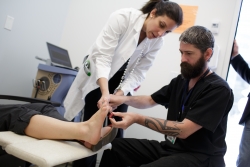


With a thermode — a device that looks like a microphone with a copper tip — the UF researchers applied heat to the feet of participants in a study that tested the inflammatory response to pain of older adults versus younger adults.To study inflammation in the blood, the scientists inserted a catheter into each participant before inducing pain. That allowed them to collect the participant’s blood before the pain stimulus and then at three, 15, 30, 45, 60 and 90 minutes after the stimulus. These blood samples allowed the researchers to study inflammatory markers in the blood, finding that older adults had higher levels of inflammation when pain was induced than the younger adults.

Riley said activation of the immune system and increased inflammation are not necessarily harmful, but it’s important to understand how the length of time the immune system is activated affects the body.

“We think that the longer you have the immune system activated, having these elevated inflammatory cytokines, the more this activation can alter the homeostasis of the body. Usually an imbalance like that can be associated with autoimmune disorders, which also increase with age,” Cruz-Almeida said. “But the truth is we don’t know what the direct implications would be. We think low-grade inflammation is related to endocrine abnormalities such as diabetes and the development of heart problems. … We need to keep looking and doing future research.”

Riley said immediate implications of the research for patients could be to attack pain quickly with anti-inflammatory medication.

“Early treatment of an injury even with over-the-counter anti-inflammatories may be a good idea,” Riley said. “It’s those first few days of bombarding the central nervous system with pain signals that has a bigger effect (on the body).”
About the Author

Morgan Sherburne


Science writer for UF Health. Morgan writes about the research of faculty physicians in the College of Medicine. She joined the UF Health staff in 2014. A Michigan native, she...Read More

https://ufhealth.org/news/2016/study-shows-pain-causes-older-adults-develop-more-inflammation-over-longer-period-time

Saturday, September 2, 2017

Is There A Good Diet For Neuropathy


Today's post from the ever-reliable neuropathydr.com (see link below) looks at the best dietary options if you have neuropathy. While it doesn't explain the science behind the choices, it does seem to be based on a low gluten food base and as gluten is more and more associated with nerve problems, this may be logical. It also has to be said that this sort of diet is never easy to shop for and there may also be budgetary considerations to bear in mind, however, if we're aiming for the best possible dietary self-care then the ideas here may be useful to you when compiling your shopping lists.

Quick Guide to the Best Neuropathy Diet
Posted by Editor on July 20, 2015

This Guide Describes What to Eat Throughout the Day for a Healthy Diet!

You have no doubt heard that changes to your diet and lifestyle can have a tremendous impact on your health as far as neuropathy and chronic pain is concerned.

But what is a neuropathy diet? Exactly what you should be eating, and what should you avoid?

Here is a breakdown of a typical day’s worth of snacks and meals on the neuropathy diet to give you an idea of what kind of adjustments you should be making on your own.

Of course, you may need to modify this general outline for your own symptoms or pain level under the supervision of your NeuropathyDR Clinician.

First, be sure to have breakfast every morning. Ideally, eat a small amount of protein within a few minutes of waking up, which helps to jump-start your mental state as well as your metabolism.

You could have a protein shake made with vegetable protein powder (dairy-free) and coconut milk or almond milk. Or if you prefer not to drink your breakfast, try granola (gluten-free) or steel cut oats.

Next, you’ll want to have a small low-carb snack about three hours after breakfast. Half an apple or banana would do the trick or a small amount of nuts, such as almonds. Be careful when consuming packaged snacks, such as protein bars, as many of them contain a great deal of sugar.

For lunch, you’ll want more protein and veggies. The easiest way to do this is make a salad featuring your favorite kinds of greens—spinach is great. Add a small amount of chicken, tuna, turkey, or salmon for a lean protein, or use tofu if you’re vegan. Throw in a few walnuts or almonds and a drizzle of olive oil.

Have another snack in mid-afternoon, something small and low-carb like your morning snack.

For dinner, emphasize vegetables like asparagus, beets, squash, sweet potatoes, or cooked spinach. Avoid starchy veggies like white potatoes or rice. For a protein, try locally sourced hormone-free beef or fresh fish.

In the evening, have one more small snack. This time it can be a treat, such as one square of dark chocolate or a SMALL serving of gluten-free low-carb cookies.

You’ll also want to have lots of water throughout the day, and limited amounts of tea or coffee are okay.

You’ll notice that this diet is dairy-free, very low in sugar, and contains no bread products or junk food.

Try making a gradual shift into the NeuropathyDR diet over a period of a few days. You won’t believe how much better it makes you feel!

For more information on the neuropathy diet and other neuropathy basics, see our guide I Beat Neuropathy!

http://neuropathydr.com/best-neuropathy-diet/

Sunday, August 27, 2017

Is Your Health Insurance Company Playing Fair


Today's post from lindanee.wordpress.com (see link below) looks at the activities of the international insurance company UNUM when it comes to disability claims from people living with HIV. It is clear in this day and age of economic crisis that all companies who may be paying out on the basis of ill-health and inability to work are looking for every possible means of not doing exactly that. This frequently means that people with genuine illnesses preventing them from being able to work, come under suspicion that they are somehow trying to defraud the system. UNUM is by no means unique in aggressively disputing HIV disability claims but this article highlights them as a major player. Of course, we all know that certain people will try to take advantage of any system that may pay out when ill-health is concerned but the vast majority of people are genuinely trying to claim what is their entitlement and what they have paid premiums for. All anybody is asking for is a level playing field and it is incumbent on firms like UNUM to be aware of the genuine problems that living with HIV can bring and assess based on facts and not assumptions. Too many people are being given parameters that are impossile to fulfill and losing out on benefits because they are being unfairly judged.


Unum – Targeting HIV/AIDS Insureds On The Internet
April 2, 2013 by lindanee

Lindanee's Blog
By and For Those With Private Disability Claims
”Search and find the weakest of us, and therein lies our strength.” Linda Nee

Since its inception more than 10 years ago, DCS, Inc. has been an advocate and supporter of those diagnosed with HIV/AIDS who have applied or been denied benefits by private disability insurers. Insurance companies such as Unum have long treated HIV insureds as vulnerable cash cows. With today’s modern medical advance technology, AIDS is no longer a death sentence giving those with the disease normal lifespans, and of course in Unum’s view, work capacity.

The development of life-saving HIV “cocktails” does not take into account the long list of HIV-related symptoms and diagnoses which continue to rob insureds of their quality of life. Regardless of the success and invention of better drugs and treatments for HIV patients there are often physical side-effects from medications taken, and in combination with other immunosuppression diseases, HIV continues to rob a large percentage of those affected with HIV from the ability to work and sustain full active lives.

Those who suffer from HIV/AIDS often report continuing symptoms of severe fatigue, unrelenting diarrhea, peripheral neuropathy, dizziness, and cognitive deficits. My research seems to indicate individuals with T-Cell counts of 500 and above are capable of normal functioning depending on combinations of medications taken and the severity of side-effects.

Although it is possible for HIV patients to live normally, these same individuals would never be able to consistently sustain full-time work. Those with T-Cell counts under 500 are susceptible to life threatening bacterial infections and are medically recommended to stay away from social contact such as work environments. Severe, unpredictable fatigue and the necessity of finding bathroom facilities quickly would make it impossible for anyone affected by AIDS to sustain work of any kind.

Over the years Unum has had many project focus days targeting HIV/AIDS claims. A few years ago, I read several of Unum’s internal medical reports recommending return to work for HIV patients with T-Cell counts as low as 200. These same Unum insureds had also provided Unum with medical evidence of severe peripheral neuropathy, and cognitive dysfunction. One Unum HIV medical review criticized the insured because he was able to travel to his second home in Texas. Clearly, Unum periodically targets the “weakest of us” whether it is HIV, heart disease, chronic back pain, or even cancer.

Of course, the Internet information highway in combination with Unum’s “snoop moles”, fuels and arms Unum with data which for the most part is inaccurate and ill-serving. Unum’s current trend is to search the Internet for HIV/AIDS related non-profit organizations and find out who is submitting articles for publication. Potentially unreported income “red flags”go up, and Unum’s claims handler’s begin investigations looking for income never received, and occupations that are merely volunteer efforts to contribute on an “as able” basis.

Unum’s first inappropriate accusation to HIV individuals who voluntarily write articles for AIDS supportive publications, is “You’re working, and you are a writer.” What follows is a long list of accusatory questions such as, “How many articles have your written? How much money have you made in the last 5 years? “Submit all of your tax returns…” “Who is your employer?” Good grief, sometimes I wonder at the intelligence of people working for Unum these days.

The voluntary submission of articles for pro-HIV/AIDS publications is NOT the same as having demonstrated physical or mental stamina, or for that matter the ability to perform full-time work. In addition, articles published on the Internet are largely unpaid and therefore there is no income to report. Further, the authors certainly are not professional writers. A professional writer must “write” every day and meet deadlines on an ongoing basis. Those with HIV can’t do that, and Unum knows it.

There are no employers; no income to report; and certainly those diagnosed with HIV do not suddenly turn into professional, free-lance writers because they are able to voluntarily submit an article for publication every now and then. My experience with assisting HIV/AIDS insureds is that as a group they feel a moral responsibility to assist others affected by the disease. And, they have a right to do that, whether they have Unum disability claims or not.

Unum as a company has always targeted HIV claims on a periodic basis. Insureds and claimants are frequently stricken by fatigue, have very low stamina and certainly are not capable of engaging in conflicts with a major disability insurer. HIV insureds receive frequent phone calls from Unum reps along with harassing requests for updated information. There appears to be a definite visible Unum paranoia concerning HIV insureds and their ability to work.

Nevertheless, as an organization Unum Group remains the only disability insurer to my knowledge which outwardly manages HIV AIDS related claims with a clearly visible bias resulting in prejudicial decisions which are largely not supported by the medical community. After all, HIV patients with T-Cell counts of 200 cannot sustain full-time work, nor should they be denied disability benefits just because Unum says they can.

In the last 11 years DCS, Inc. has developed an expertise in managing HIV private disability claims, but our success is more than just expertise. As a disability consultant, I’ve learned that our strengths as human beings often come from the weakest among us. I would not be in the business I’m in if I didn’t think so.

Unum Group is wrong in its unconscionable targeting of HIV claims and as long as DCS, Inc. and NCDI are going-concerns we will continue to offer our services to those affected by HIV. Unum’s lack of any moral, ethical, or regulatory accountability for its actions continues to pinpoint the company as a modern insurance rainmaker for those suffering from HIV.

http://lindanee.wordpress.com/2013/04/02/unum-targeting-hivaids-insureds-on-the-internet/

Thursday, August 24, 2017

Neuropathy Knowledge What Is An Axon


Today's post from sciencedaily.com (see link below) is the seventh part of a series from the same source providing readers with explanations and information about many of the medical terms they hear when researching neuropathy, or sitting in the doctor's surgery and talking about it. Today it explains the word 'axon' and gives related definitions of other words associated with its workings in the nervous system. Worth following the links if you have the time.

Axon
Science Daily via Wikipedia

An axon, or nerve fiber, is a long slender projection of a nerve cell, or neuron, that conducts electrical impulses away from the neuron's cell body or soma.

Axons are in effect the primary transmission lines of the nervous system, and as bundles they help make up nerves.

Individual axons are microscopic in diameter - typically about one micrometre across - but may extend to macroscopic lengths.

The longest axons in the human body, for example, are those of the sciatic nerve, which run from the base of the spine to the big toe of each foot.

These single-cell fibers may extend a meter or even longer. In vertebrates, the axons of many neurons are sheathed in myelin, which is formed by either of two types of glial cells: Schwann cells ensheathing peripheral neurons and oligodendrocytes insulating those of the central nervous system.

For more information about the topic Axon, read the full article at Wikipedia.org, or see the following related articles:


Myelin — Myelin is an electrically insulating phospholipid layer that surrounds the axons of many neurons. It is an outgrowth of glial cells: Schwann cells ...  read more


Neural development — The study of neural development draws on both neuroscience and developmental biology to describe the cellular and molecular mechanisms by which ...read more


Pupillary reflex — In medicine, the pupillary reflex or pupillary light reflex, is the reduction of pupil size in response to light. It is a normal response and ...  read more


Sensory neuron — Sensory neurons are nerve cells within the nervous system responsible for converting external stimuli from the organism's environment into internal ... read more


Neuron — Neurons (also known as neurones, nerve cells and nerve fibers) are electrically excitable cells in the nervous system that function to process and ...  read more


Sympathetic nervous system — The sympathetic nervous system (SNS) is part of the autonomic nervous system (ANS), which also includes the parasympathetic nervous system (PNS). The ...  read more


Neurobiology — Neurobiology is the study of cells of the nervous system and the organization of these cells into functional circuits that process information and ...  read more


Nociceptor — A nociceptor is a sensory receptor that sends signals that cause the perception of pain in response to potentially damaging stimulus. Nociceptors are ...  read more


Chemical synapse — Chemical synapses are specialized junctions through which cells of the nervous system signal to one another and to non-neuronal cells such as muscles ...  read more


Nervous system — The nervous system of an animal coordinates the activity of the muscles, monitors the organs, constructs and also stops input from the senses, and ...  read more

http://www.sciencedaily.com/articles/a/axon.htm

Tuesday, August 22, 2017

Is Discharge A Sign Of Pregnancy


Civil War Discharge Papers

Civil War Discharge Papers


Content provided on this site is for entertainment or informational purposes only and should not be construed as medical or health, safety, legal or financial advice..Why should I sign up for WebMD? With a WebMD Account you can: Track your way to weight loss success; Manage your family's vaccinations; Join the conversation.Diabetes Cause Vaginal Discharge Treatment Diabetes Alternative Diabetes Treatment Diabetes Cause Vaginal Discharge ::The 3 Step Trick that Reverses .Diabetes Cause Vaginal Discharge Treatment Diabetes Alternative Diabetes Treatment Diabetes Cause Vaginal Discharge ::The 3 Step Trick that Reverses .Printables, coloring pages, recipes, crafts, and more from your child's favorite Nickelodeon and Nick Jr. shows..Diabetes and urine smell Diabetes Causes Discharge And Ear :: diabetes and urine smell - The 3 Step Trick that Reverses Diabetes Permanently in As Little as .Diabetes Sign And Symptoms Diabetes Sign And Symptoms :: what is diabetes mellitus 2 - The 3 Step Trick that Reverses Diabetes Permanently in As Little as 11 .


Weeks 2 Days Yellow Discharge My Metoidioplasty Experience

Weeks 2 Days Yellow Discharge My Metoidioplasty Experience

What Does Discharge Look Like

What Does Discharge Look Like


Diabetes Cause Vaginal Discharge Treatment Diabetes Alternative Diabetes Treatment Diabetes Cause Vaginal Discharge ::The 3 Step Trick that Reverses .Diabetes Cause Vaginal Discharge Treatment Diabetes Alternative Diabetes Treatment Diabetes Cause Vaginal Discharge ::The 3 Step Trick that Reverses .Diabetes and urine smell Diabetes Causes Discharge And Ear :: diabetes and urine smell - The 3 Step Trick that Reverses Diabetes Permanently in As Little as .Why should I sign up for WebMD? With a WebMD Account you can: Track your way to weight loss success; Manage your family's vaccinations; Join the conversation.Content provided on this site is for entertainment or informational purposes only and should not be construed as medical or health, safety, legal or financial advice..Diabetes And Pregnancy Powerpoint Diabetes And Pregnancy Powerpoint :: home reme.s for diabetic ketoacidosis - The 3 Step Trick that Reverses Diabetes .Printables, coloring pages, recipes, crafts, and more from your child's favorite Nickelodeon and Nick Jr. shows..Recipes, Crafts and Activities The Nightmare Before Christmas Party. What is this place that we have found?.


Is Massage Really Wise For Neuropathy


Today's post from painscience.com (see link below) warns about the possible disadvantages of massage therapy. Many people with neuropathy symptoms somehow assume that massage will help them feel better and in many cases they do but you need to go to a massage therapist who knows what he or she is doing. The idea that you may come away with symptoms that are worse than before should be enough to make you think about whether a good pummelling is really good for your nerves or not. Gentle massage may well be very effective in calming down painful nerve areas, or generally making you relax but the minute the masseur goes for deep tissue and joint massage may be the moment you ask how much experience he or she has with neuropathy. You probably know yourself, if you've tried massaging your neuropathic feet. Half the time you can't feel anything due to the numbness but the moment you push just that little bit too hard to relieve the burning or tingling, you can be suffering for days. Always best to go to a qualified masseur with relevant experience, or else the happy ending may not be as happy as you thought (goes for all kinds of massage!!)
 

What Could Possibly Go Wrong With Massage?
Rare but real adverse effects of massage therapy, especially “deep tissue” massage
updated July 16 2014 by Paul Ingraham, Vancouver, Canada bio

People think of massage therapy as a “safe” therapy, and of course it mostly is. But things can go wrong, or at least a bit sour. While serious side effects in massage therapy are extremely rare, minor side effects are downright common. A 2007 survey of 100 massage patients1 found that 10% of 100 patients receiving massage therapy reported “some minor discomfort” in the day following treatment. This would mainly be a familiar slight soreness that is common after a massage, known as “post-massage soreness and malaise” (PMSM) — and I’m surprised only 10% reported it. The massages they were getting must have been quite gentle.2

Interestingly, 23% reported unexpected benefits that had nothing to do with aches or pains. (Benefits for musculoskeletal problems were not documented.)

This study is underpowered. It cannot and does not rule out rare and/or serious side effects of massage therapy, which do exist. You could probably do several studies of 100 patients without encountering a single nasty situation. But what if you surveyed 1,000 patients? Or 10,0000? Massage is not completely safe — what is? — and other adverse effects would almost certainly turn up in a big enough survey. Nevertheless, according to one of alternative medicine’s most vigorous critics, Dr. Edzard Ernst, “Serious adverse events are probably true rarities.”3 And yet, reviewing the literature again in 2013, Ernst and Posadzki found at least 18 reported examples of “moderately severe” reactions to normal massage, especially of the neck.4
When massage goes bad

So what could possibly go wrong? Massage can…
directly cause new injuries (mostly quite minor, but not all)
aggravate existing injuries and chronic pain problems
distract patients from more appropriate care
mildly stress the body And don’t forget, of course, that that pointlessly draining your wallet is another kind of pain. If someone spends $5,000 on massage therapy that has only a minor therapeutic effect, or none at all, is that an “injury”? It’s an insult, at the least!

In my decade (2000–2010) as a massage therapist, I met many patients who had been harmed by massage therapy to some degree — fortunately, mostly just expensive disappointments and minor backfires, but quite a few more serious cases too.5 


Sensory injury

A painful, alarming sensory experience can actually dial up pain sensitivity — even long term.6 Furthermore, vulnerability to this awful phenomenon is much more common and significant in desperate patients who already have chronic pain — so they seek and tolerate intense therapy. People experiencing pain system dysfunction can have minor & major setbacks in response to excessively painful massage.

The experience of pain is affected by many factors, including emotional and psychological ones. People in chronic pain usually experience some degree of pain neurology dysfunction, and a breakdown of the relationship between how bad things feel and how much is really wrong. That breakdown can be seriously worsened by threatening sensations. Thus, people experiencing pain system dysfunction can have minor and major setbacks in response to excessively painful massage.

One of my readers suffered this kind of disaster. She was injured by “fascial release” therapy, a style which is often too intense and may focus on treating connective tissues to the exclusion of considering the patient’s comfort and nervous system.

I may have been too aggressive with a few patients over the years. I never did serious harm this way as far as I know, but I’m sure that I occasionally did more harm than good. This failure was due entirely to my ignorance of pain science: despite being an unusually well educated massage therapist, I simply did not know that an intense massage could change pain sensitivity itself. Does your therapist?
Pain is Weird Pain science reveals a volatile, misleading sensation that is often more than just a symptom, and sometimes worse than whatever started it ~ 9,000 words
The Pressure Question in Massage Therapy What’s the right amount of pressure to apply to muscles in massage therapy and self-massage? ~ 4,500 words
Poisoned by massage

Excessive pressure probably has another predictable outcome: a light poisoning. Seriously.

For example: an 88-year old man collapsed the day after an unusually strong 2-hour session of massage therapy.7 He had too much myoglobin in his blood, and it was poisoning his kidneys and generally making him feel rotten. It’s not a sure thing that his condition was cause by the massage — but it is quite likely. It is almost certainly a perfect example of one of those rare but serious complications of massage. Another case study comes up below.

Ironically, many people believe that massage is a detoxification treatment, but in fact it’s probably the opposite. Ironically, many people believe that massage is a detoxification treatment, but in fact it’s probably the opposite. Post-massage soreness and malaise is probably caused by mild rhabdomyolysis (“rhabdo”): poisoning by the waste products of injured muscle.

True rhabdo is a medical emergency in which the kidneys are poisoned by myoglobin from muscle crush injuries. But many physical and metabolic stresses cause milder rhabdo-like states — even just intense exercise, and probably massage as well. There are many well-documented cases of exertional or “white collar” rhabdo, and there is a strong similarity between PMSM and ordinary exercise soreness. A rhabdo cocktail of waste metabolites and by-products of tissue damage is probably why we feel a bit cruddy after all biological stresses and traumas — including massage, sometimes.

PMSM is just an unavoidable mild side effect of strong massage. And for a few more vulnerable patients, it could actually be a little dangerous.
Poisoned by Massage Rather than being “detoxifying,” massage may cause a modestly toxic situation in the body ~ 4,500 words 


Other examples of massage wounds

The neck is not generally a fragile structure, but it is in some people. Another serious example of an adverse effect of massage is what happened to my barber — either a brain stem injury or mini-stroke caused by careless massage of a vulnerable neck. One of my own patients was injured the same way by another therapist, vomiting and retching for hours afterwards (a nasty symptom of brain stem impingement, or ripping of an artery going to the brain). I came close to doing this to another patient — that’s three examples of such patients in my career — but I’m proud to say that I spotted the warning signs and avoided disaster.

A weird case of brain artery damage (extracranial internal cartoid artery dissection, specifically) was reported in 2004 by the Southern Medical Journal: a 38-year-old woman gave herself a stroke by using a vibrating massage tool for long and too hard on her neck.8 Obviously such an incident has little to do with professional massage. Nevertheless, it demonstrates that the arteries of the neck are a little bit fragile — and I have no doubt that there are poorly trained or incompetent therapists out there would might get carelessly exuberant in this region, while trying to treat the scalenes: see Massage Therapy for Neck Pain, Chest Pain, Arm Pain, and Upper Back Pain.

Another weird, extreme case study paper tells the horror story of one person’s awful experience with a severe reaction to (apparently) infrared heat and massage therapy.9 The trouble started after several treatments. His neck and arms were swollen, the pain became “unbearable,” and his “serum muscle enzymes were increased” — which means some degree of rhabdo, which implicates the massage itself as a significant mechanism of injury. Massage is not likely to “blame” for the incident, though — it was probably interacting with some unidentified vulnerability in the patient, such a muscle disease or a complication caused by a medication. Clearly massage and heat alone do not normally cause such severe side effects! Nevertheless, the potential for very unpleasant interactions exists.

“Alternative therapies may have serious complications, and patients usually do not report them unless asked specifically,” the authors point out.

I am one-degree of separation from a patient whose femur (the big leg bone!) was fractured by a massage — it was a weak and injured femur already … but wow!

Nerves aren’t nearly as vulnerable to pressure as people generally think — most of them can actually take quite a licking and keep on ticking without a single symptom — but they aren’t invulnerable. And I once caused a nerve injury myself: it was a minor injury, but it did — augh — result in weeks of aggravating discomfort for my client. The Archives of Physical Medicine & Rehabilitation reported a similar spinal accesory nerve injury: “a rare and illustrative case of spinal accesory neuropathy associated with deep tissue massage leading to scapular winging [the shoulder blade sticking out] and droopy shoulder as a result of weakness of the trapezius muscle.”10
What Happened To My Barber? Either atlantoaxial instability or vertebrobasilar insufficiency causes severe dizziness and vomiting after massage therapy, with lessons for health care consumers ~ 2,750 words 


Lessons for professionals and patients

These are rare but real incidents. Healthy people are unlikely to be injured by massage. Most of dangers are related to undetected vulnerabilities, and they emphasize the importance of alternative health professionals being trained to spot the scary stuff. The measure of a health professional’s competence is not what they do with relatively healthy patients, but whether they have the training and humility to realize when they are on thin ice.

Manual therapists need to know that the most important part of their job is the smart management high-risk situations that they may see only a handful of times in their entire career. It’s like being on guard duty: 99.9% of the time, nothing bad happens. But how do you handle a curve ball when it finally comes?

Consumers need to know that cocky, overconfident therapists who trash-talk “mainstream” health care are all-too-likely to be ignorant of critical warning signs, or dismissive of them. The skeptical salamander thinks these therapists shouldn’t be allowed to touch anyone. See Missing Serious Symptoms.

About Paul Ingraham


I am a science writer, former massage therapist, and assistant editor of ScienceBasedMedicine.org. I have had my share of injuries and pain challenges as a runner and ultimate player. My wife and I live in downtown Vancouver, Canada. See my full bio and qualifications, or my blog, Writerly. You might run into me on Facebook and Google, but mostly Twitter.


Notes
Cambron JA, Dexheimer J, Coe P, Swenson R. Side-effects of massage therapy: a cross-sectional study of 100 clients. J Altern Complement Med. 2007 Oct;13(8):793–6. PubMed #17983334. BACK TO TEXT

 
Indeed, that seems very likely given the context. I doubt they would test painfully strong massage on 100 people without mentioning the intensity. However, painfully strong massage is quite common “in the wild.” Certainly intense massage is unusually common here in Vancouver, where there’s a regrettable professional predeliction for it. BACK TO TEXT
Ernst E. The Safety of Massage Therapy. Rheumatology. 2003;42 (9):1101–1106. PubMed #12777645. PainSci #54834.

Is massage safe? Researchers attempted to answer that question. Four databases were reviewed; all articles which reported adverse effects of any type of massage therapy were looked at. In the end, 20 reports were looked at. “The majority of adverse effects were associated with exotic types of manual massage or massage delivered by laymen, while massage therapists were rarely implicated.”

The conclusion was that, while not entirely risk free, “serious adverse events are probably true rarities.” BACK TO TEXT
Posadzki P, Ernst E. The safety of massage therapy: an update of a systematic review. Focus on Alternative and Complementary Therapies. 2013;18(1):27–32. PainSci #53974.


OBJECTIVE: To update a systematic review evaluating the safety of massage therapy.

METHODS: A literature search was carried out using four electronic databases for the period December 2001 to May 2012. All articles reporting adverse effects of massage therapy were retrieved. Adverse effects relating to atypical massage, aromatherapeutic massage oil or ice were excluded. No language restrictions were applied. Data were extracted and evaluated according to predefined criteria.

RESULTS:
Seventeen case reports and one case series were published since our previous review. The reported adverse effects comprised acute paraplegia and abdominal distension, bladder rupture, bilateral cerebellar infarction, cervical lymphocele, cervical cord injury, cervical internal carotid and vertebral dissection, chylothorax, haematuria, interosseous nerve palsy, myopathy, perinephric haemorrhage, rhabdomyolysis, severe headache, blurred vision, paraesthesia and focal motor seizures. In the majority of the reports, a cause–effect relationship was certain or almost certain. Serious adverse effects were most commonly associated with massage techniques applied to the neck area.

CONCLUSION:
Evidence suggests that massage may occasionally lead to moderately severe adverse effects. BACK TO TEXT

 
Several dozen at least who experienced minor negative effects and a lighter wallet. I recall only about dozen or so having really poor experiences, mostly aggravated chronic pain. Only a handful of those were obviously significantly injured by massage. But those were sad cases. BACK TO TEXT

 
Woolf CJ. Central sensitization: Implications for the diagnosis and treatment of pain. Pain. 2010 Oct;152(2 Suppl):S2–15. PubMed #20961685. PainSci #54851.

Pain itself often modifies the way the central nervous system works, so that a patient actually becomes more sensitive and gets more pain with less provocation. That sensitization is called “central sensitization” because it involves changes in the central nervous system (CNS) in particular — the brain and the spinal cord. Victims are not only more sensitive to things that should hurt, but also to ordinary touch and pressure as well. Their pain also “echoes,” fading more slowly than in other people.

For a much more detailed summary of this paper, see Central Sensitization in Chronic Pain. BACK TO TEXT

 
Lai MY, Yang SP, Chao Y, Lee PC, Lee SD. Fever with acute renal failure due to body massage-induced rhabdomyolysis. Journal of Nephrology, Dialysis and Transplantation. 2006 Jan;21(1):233–4. PubMed #16204282. PainSci #54301. BACK TO TEXT

 
Grant AC, Wang N. Carotid dissection associated with a handheld electric massager. South Med J. 2004 Dec;97(12):1262–3. PubMed #15646768. BACK TO TEXT

 
Tanriover MD, Guven GS, Topeli A. An unusual complication: prolonged myopathy due to an alternative medical therapy with heat and massage. South Med J. 2009 Sep;102(9):966–8. PubMed #19668045. BACK TO TEXT

 
Aksoy IA, Schrader SL, Ali MS, Borovansky JA, Ross MA. Spinal accessory neuropathy associated with deep tissue massage: a case report. Arch Phys Med Rehabil. 2009 Nov;90(11):1969–72. PubMed #19887226. BACK TO TEXT


https://www.painscience.com/articles/whats-the-harm.php

Monday, August 21, 2017

Chronic Inflammatory Neuropathy Is That What You Have


Today's post from nlm.nih.gov (see link below) may confuse some readers; partly because there are just way too many names for neuropathic conditions but also because they're not sure if their symptoms are 'bad' enough to qualify as having chronic inflammatory neuropathy. This article describes what it is, what the symptoms are and why it happens, as well as showing some tests and assessments. The main difference lies in the cause - the immune system attacks the nervous system and gradually degrades nerves and their linings but after that, the reasons why can be (as you know) many and varied.

Chronic inflammatory polyneuropathy
 US National Library of medicine 2014
 
Chronic inflammatory polyneuropathy involves nerve swelling and irritation (inflammation) that leads to a loss of strength or sensation.

Causes

Chronic inflammatory polyneuropathy is one cause of damage to nerves outside the brain or spinal cord (peripheral neuropathy). Polyneuropathy means several nerves are involved. It usually affects both sides of the body equally.

Chronic inflammatory demyelinating polyneuropathy (CIDP) is the most common chronic neuropathy caused by an abnormal immune response. CIDP occurs when the immune system attacks the myelin cover of the nerves.

The cause of chronic inflammatory polyneuropathy is an abnormal immune response. The specific triggers vary. In many cases, the cause cannot be identified.

It may occur with other conditions, such as:

Autoimmune disorders
Chronic hepatitis
Diabetes
HIV
Inflammatory bowel disease
Systemic lupus erythematosus
Lymphoma
Paraneoplastic syndrome
Thyrotoxicosis
Side effects of medicines to treat cancer or HIV

Symptoms

Difficulty walking due to weakness or trouble feeling your feet
Difficulty using the arms and hands or legs and feet due to weakness
Sensation changes, such as numbness or decreased sensation, pain, burning, tingling, or other abnormal sensations (usually affects the feet first, then the arms and hands)
Weakness, usually in the arms and hands or legs and feet

Other symptoms that can occur with this disease:
Abnormal movement
Breathing difficulty
Fatigue
Hoarseness or changing voice
Loss of function or feeling in the muscles
Muscle atrophy
Muscle contractions
Speech impairment
Swallowing difficulty
Uncoordinated movement

Exams and Tests

The doctor will examine you and ask questions about your medical history. The physical exam shows:
Loss of muscle mass
No reflexes
Muscle weakness or paralysis
Sensation problems on both sides of the body

Tests may include:
Electromyography (EMG)
Nerve conduction tests
Nerve biopsy
Spinal tap
Blood tests may be done to look for specific proteins that are causing the immune attack on the nerves

Which other tests are done depends on the suspected cause of the condition. Tests may include x-rays, imaging scans, and blood tests.

Treatment

The goal of treatment is to reverse the attack on the nerves. In some cases, nerves can heal and their function can be restored. In other cases, nerves are badly damaged and cannot heal, so treatment is aimed at preventing the disease from getting worse.

Which treatment is given depends on how severe the symptoms are, among other things. The most aggressive treatment is usually only given if you have difficulty walking or if symptoms interfere with your ability to care for yourself or perform work functions.

Treatments may include:

Corticosteroids to help reduce inflammation and relieve symptoms
Other medications that suppress the immune system (for some severe cases)
Plasmapheresis or plasma exchange to remove antibodies from the blood
Intravenous immune globulin (IVIg), which involves adding large numbers of antibodies to the blood plasma to reduce the effect of the antibodies that are causing the problem

Outlook (Prognosis)

The outcome varies. The disorder may continue long term, or you may have repeated episodes of symptoms. Complete recovery is possible, but permanent loss of nerve function is not uncommon.

Possible Complications

Pain
Permanent decrease or loss of sensation in areas of the body
Permanent weakness or paralysis in areas of the body
Repeated or unnoticed injury to an area of the body
Side effects of medications used to treat the disorder

When to Contact a Medical Professional

Call your health care provider if you have a loss of movement or sensation in any area of the body, especially if your symptoms get worse.

Alternative Names


Polyneuropathy - chronic inflammatory; CIDP; Chronic inflammatory demyelinating polyneuropathyPolyneuropathy - chronic inflammatory; CIDP; Chronic inflammatory demyelinating polyneuropathy

References

Katirji B, Koontz D. Disorders of peripheral nerves. In: Daroff RB, Fenichel GM, Jankovic J, Mazziotta JC, eds.Katirji B, Koontz D. Disorders of peripheral nerves. In: Daroff RB, Fenichel GM, Jankovic J, Mazziotta JC, eds. Bradley's Neurology in Clinical Practice. 6th ed. Philadelphia, PA: Elsevier Saunders; 2012:chap 76.

Shy ME. Peripheral neuropathies. In: Goldman L, Schafer AI, eds.Shy ME. Peripheral neuropathies. In: Goldman L, Schafer AI, eds. Goldman's Cecil Medicine. 24th ed. Philadelphia, PA: Elsevier Saunders; 2011:chap 428.

Update Date 7/27/2014

Updated by: Joseph V. Campellone, MD, Department of Neurology, Cooper University Hospital, Camden, NJ. Review provided by VeriMed Healthcare Network. Also reviewed by David Zieve, MD, MHA, Isla Ogilvie, PhD, and the A.D.A.M. Editorial team.

https://www.nlm.nih.gov/medlineplus/ency/article/000777.htm

Saturday, August 19, 2017

Is There A Connection Between Gluten And Neuropathy


Today's post from neuropathydr.com (see link below) discusses the much debated link between neuropathy and gluten intake. It's becoming more and more evident that people with neuropathy who give up or reduce gluten in their diets, find that there is a resulting improvement in their symptoms. That of course, says very little until there is very strong scientific evidence to back up the link. It may be worth doing your own research to build up enough information to make an educated decision about gluten in your own situation. One thing is certain, giving up gluten is no easy task. It's such an integral part of our diet, many people find the alternatives both boring and difficult to maintain. However, if it means that your neuropathic symptoms improve...

Gluten Neuropathy? Are They Connected? 
Posted by Dr John Hayes jr on May 15, 2014

All of us can remember at some point in time, walking into a bakery or kitchen where fresh breads and pastries were being made.

The aroma can be overwhelming and draws us like magnets.

Now once upon a time most especially when human beings were externally physically active, bread was in fact the staff of life. There was no problem consuming massive amounts of carbohydrates as long as it was consumed during physical activity.

Well Flash Forward 300 years and the situation is now, entirely different. Not only are we less active but grains are often heavily processed, grown on nutrient deficient soils, or perhaps even GMO.

Breads and pastries are also sources of extremely high carbohydrate levels. In fact a sandwich can have 40 to 60 grams of carbohydrates!

And this has had an effect on neuropathy and our health in general.

With neuropathy however the stakes are higher. Gluten can and does cause celiac disease.

Sometimes in celiac disease, the only presentation is a gluten neuropathy.

Most of the time however, it’s a simple fact that gluten can aggravate our bellies at the least and yes even our aches and pains including neuropathy.

You see gluten is a gooey protein. That’s what gives bread that wonderful texture.

But most of us who stop eating gluten on regular basis find out quickly how much better we feel.

It appears that this is because even those of us who don’t have celiac disease and even test negative for allergy to gluten, may still be “sensitive”.

In gluten neuropathy as well as in other patients it appears that gluten may actually trigger inflammatory reactions. This ads to pain, stiffness and posibly neuropathy symptoms.

However the evidence is not conclusive, and there are many that would argue this point.

What I can tell you, as a clinician is that many patients feel so much better we feel it’s worth a try.

http://neuropathydr.com/gluten-neuropathy/

Wednesday, August 16, 2017

DIARY IS GOOD FOR YOUR METABOLIC HEALTH


Dairy is considered part of a healthy diet and dietary guidelines recommend the daily consumption of 2-4 portions of milk-based products such as milk, yogurt, cheese, cream and butter

It's well known that dairy products contain calcium and minerals good for bones, but new research has shown that dairy consumption may also have beneficial effects on metabolic health and can reduce risk of metabolic diseases such as obesity and type 2 diabetes.
Curious about these impacts, researchers from CHU de Québec Research Center and Laval University studied the dairy-eating habits of healthy French-Canadians' and monitored how dairy consumption may have an effect on their overall metabolic health. They published their findings today in the journalApplied Physiology, Nutrition, and Metabolism.

The aim of this study was to determine associations between dairy intake and specific metabolic risk factors, including anthropometric status, plasma glucose, plasma lipid profile, inflammatory markers and blood pressure, in a healthy population.
A total of 254 participants from the greater Quebec City metropolitan area were recruited; 233 participants (105 men and 128 women) met all the eligibility criteria for the study ‒ meaning subjects had healthy metabolic profiles.

The study showed that the average individual consumed 2.5 ± 1.4 portions of dairy per day. However, nearly 45% of the population in this study did not meet Canada's Food Guide recommendations of at least 2 portions of dairy products a day. These findings are supported by recent Canadian surveys that highlighted an under consumption of dairy products by Canadians.

Data suggest that trans-palmitoleic acid found in plasma may be potentially used as a biomarker to evaluate dairy consumption. Trans-palmitoleic acid, is naturally present in milk, cheese, yogurt, butter, and meat fat but cannot be synthetized by the body. This fatty acid has been recently shown to have health-promoting effects. In this study, that trans-palmitoleic acid level was related to lower blood pressure in men and women, and to lower body weight in men.

Dairy intake is associated with lower blood glucose and blood pressure in the population studied, though no causal relationships can be made due to the cross-sectional design. This study adds to a growing body of literature demonstrating a lack of detrimental health effects with higher dairy intake.

Dr. Iwona Rudkowska, a research scientist at the Endocrinology and Nephrology Department, at the CHU de Québec Research Center and assistant professor at Laval University , says "additional well-designed intervention studies are needed to ascertain the effects of increased dairy consumption on metabolic health in healthy and in metabolically deteriorated populations."


Wednesday, August 9, 2017

Is Turmeric curcuma The Wonder Spice


Today's post from seattleorganicrestaurants.com (see link below) doesn't seem to have medical or scientific authorship but does refer to its sources. The reason I say that is because it makes some astonishing claims for the healing powers of Turmuric (Curcuma depending on where you live). Now even if only a tenth of these are bordering on the truth, it still comes over as a wonder-spice. Turmeric has long been advanced as a help for nerve pain and its symptoms (see other posts via the search button on this blog), so any lengthy article about the spice is certainly worth a look for neuropathy patients. I suggest you read it and then make your own minds up (maybe after also discussing it with a health professional or a qualified herbalist). You do slightly wonder why India and south east Asia in general isn't the healthiest place in the world, considering how much turmeric is used in their diet...but then again, look at the populations, that may be evidence enough😏

Studies show that turmeric can be as effective as 14 pharmaceutical drugs
Seattle Organic Restaurants 2016

Turmeric and saffron are the two prominent spices used in South Asian and Middle Eastern dishes including Persians and Indians. Persian saffron and turmeric are very well-known because of their unique quality and taste. For thousands of centuries, curcumin known as turmeric has been used for its healing and medicinal properties. Based on an informative article written by greenmedinfo.com, turmeric is as effective and if not even better than 14 different pharmaceutical drugs in the market.


Here are some of the scientific studies about the health benefits of turmeric:


1. Lowering the level of bad cholesterol and improving heart health -- Alternative drugs: Lipitor and atorvastatin

A 2004 study published in the journal Atherosclerosis shows that turmeric can reduce the level of bad cholesterol and fight the plaque buildup in the arteries which is an important factor in developing heart diseases. Another 2008 study published in the journal Drugs in R & D shows that turmeric extract is as beneficial as the drugs used for inflammation and type 2 diabetics.

Besides lowering the bad cholesterol levels and fighting plaque buildup in the arteries, turmeric can improve the cardiovascular health. A study published in 2012 discovered that both exercise and curcumin supplements can significantly improve the cardiovascular health. In conclusion, turmeric can be as effective as conventional drugs such as Lipitor and atorvastatin (for lowering cholesterol and improving heart health), without having the side effects.

2. Great anti-inflammatory -- Alternative drugs: Corticosteroids and steroid

Inflammation is the root of many chronic diseases including cancer, arthritis, dementia and heart disease. Poor eating habits and high intake of omega 6 versus omega 3 is the leading cause of chronic inflammation. Studies show that turmeric is a great source of anti-inflammatory.

A study published in the journal Phytotherapy Research showed that the powerful antioxidants in turmeric can be as effective as steroid in treatment of chronic anterior uveitis (an inflammatory eye disease). Another study published in Critical Care Medicine showed that turmeric is as effective as corticosteroid drug known as dexamethasone and can provide relief for inflamed areas of the body.

Also a study published in the journal Oncogene discovered that curcumin is as effective as other anti-inflammatory drugs that can kill cancer cells such as aspirin, ibuprofen, sulindac, phenylbutazone, naproxen, indomethacin, diclofenac, dexamethasone, celecoxib, and tamoxifen.

3. Improving depression and suppressing negative thoughts
-- Alternative drugs: Prozac/Fluoxetine, Imipramine

A study published in 2011 in the journal Acta Poloniae Pharmaceutica showed that turmeric can be as effective as anti-depressant drugs for improving depression and reducing negative thoughts, without having the side effects of anti-depressant drugs.

4. Blood thinner -- Alternative drug: Aspirin:

A study published in the journal Arzneimittelforschung discovered that curcumin has anti-platelet and prostacyclin modulating effects of aspirin and can help to reduce the risk of heart attack or stroke without having the side effects of aspirin.


5. Destroying cancer cells -- Alternative drug: Chemotherapy


Studies show that turmeric can destroy and kill cancer cells. In 2007, a study published in the International Journal of Cancer showed that curcumin is as effective as oxaliplatin drug for treating colorectal cancer.

In another study published in the journal Breast Cancer Research and Treatment, researchers discovered that turmeric can target the cancer cells while leaving healthy cells unharmed. Also, another study published by researchers at University of Texas shows that turmeric is very effective in killing cancer cells and leaving healthy cells unharmed.

6. Diabetes -- Alternative drugs: Diabetes drugs such as Metformin

A 2009 study published in the journal Biochemitry and Biophysical Research showed that curcumin can be 500 times to 100,000 times (in the form known as tetrahydrocurcuminoids(THC)) more effective than diabetic drugs such as metformin. The researchers also concluded that turmeric can suppress glucose production in the liver and help diabetic patients.

7. Alzheimer's Disease or dementia: Alternative drugs: Memantine and Diclofenac

In a study published in Annals of Indian Academy of Neurology, the researchers discovered that taking one-quarter of a teaspoon of turmeric extract or powder daily can improve the symptoms of Alzheimer's and dementia.

According to the researchers, curcumin is a powerful antioxidant and anti-inflammatory that can improve the cognitive functions in patients with AD. The authors suggest that “a growing body of evidence indicates that oxidative stress, free radicals, beta amyloid, cerebral deregulation caused by bio-metal toxicity and abnormal inflammatory reactions contribute to the key event in Alzheimer's disease pathology. Due to various effects of curcumin, such as decreased Beta-amyloid plaques, delayed degradation of neurons, metal-chelation, anti-inflammatory, antioxidant and decreased microglia formation, the overall memory in patients with AD has improved”.

8. Protecting the brain damage due to heavy alcohol consumption:

In a study at PanjabUniversity Institute of Pharmaceutical Sciences, the researchers found out that the potent antioxidant and anti-inflammatory molecule in turmeric known as curcumin can fight against chronic alcohol-induced cognitive dysfunction.

9. Anti-aging properties:

Studies show that the curcumin and its active metabolite, tetrahydrocurcumin (THC) could significantly increase the lifespan of three microorganisms including roundworms, Fruit flies and mice. According to the authors of the study, “given the long and established history of turmeric as a spice and herbal medicine, its demonstrated chemopreventive and therapeutic potential, and its pharmacological safety in model systems, curcumin, the bioactive extract of turmeric, promises a great future in human clinical studies designed to prevent and/or delay age-related diseases”.

10. Regenerating liver tissues:

In a study published in the Journal of the Medical Association of Thailand, the researchers discovered that primary polyphenol in turmeric, can repair and even regenerate the liver tissues of diabetic rats.

In conclusion, the studies show that the active compound in turmeric known as curcumin is as effective (in some cases even more potent) as pharmaceutical drugs. According to greenmedinfo.com, turmeric can be even more effective than the following lists of medical conditions and drugs:

· NSAIDs (non-steroidal anti-inflammatory drugs)

· Hydrocortisone (for inflammation)

· Prednisone (for inflammation)

· Corticosteroids (uveitis)

· Memantine and Diclofenac (for memory)

· Atorvastain (for inflammation-mediated endothelial dysfunction)

· Dexamethasone (lung transplantation or injury)

· Fluoxetine [Prozac] and imipramine [Tofranil] (depression)

· Acetylsalicylic acid (Thrombosis and Arthritis)

· Quinidine (myocardial ischemia)

· Oxaliplatin (Colorectal Cancer)

· Metformin (Gluconeogenesis/Blood Sugar

Sources:


http://www.greenmedinfo.com/blog/turmeric-may-repair-and-regenerate-diabetic-liver-function

http://sciencealerts.com/

http://www.seattleorganicrestaurants.com/vegan-whole-food/turmeric-curcumin-as-effective-as-pharmaceutical-drugs.php


An Opioid Without Side Effects For Nerve Pain Is That Possible


Today's post is from genengnews.com (see link below). Don't you just love reading an article that contains a sentence like: “Unlike the conventional opioid fentanyl, this agonist showed pH-sensitive binding, heterotrimeric guanine nucleotide–binding protein (G protein) subunit dissociation by fluorescence resonance energy transfer, and adenosine 3′,5′-monophosphate inhibition in vitro.”!! However, with this sort of text, you have to remember that the ordinary neuropathy patient is essentially not the target audience here and this sort of article needs to be read with a sort of 'skim' technique that gives you the gist of what's being said, while skipping over the techno-speak. The article talks about a new form of opioid that is being developed that does the pain-killing job very effectively but doesn't have the side-effects that the media and politicians just can't cope with at the moment. We have to applaud research in the opioid field that doesn't begin with a skull and crossbones declaration that 'all opioids are bad'. Here they are genuinely recognising the benefits of opioids while trying to eliminate the potential harmful side effects. The whole world seems to be searching for opioid alternatives at the moment (powerful lobby - the anti-opioidals!) when the logical thing to search for is opioid adaptations that make them more user-friendly. Worth a read - you'll get the message I promise you.

Opioid Acts Only on Hurt Tissues, Skips Side Effects 
March 6, 2017 Gen News Highlights

  A new opioid can target “disease-specific” (pathological rather than physiological) conformations of receptors and ligands by selectively activating opioid receptors where acidic conditions prevail, as in tissues affected by inflammation or injury. Thus, the opioid brings pain relief at the site of inflammation and does not affect healthy tissues, such as those of the brain or intestinal wall, thereby avoiding side effects. [G. Del Vecchio & V. Spahn/Freepik]

Opioids, like sledgehammers, are powerful but blunt tools. When they are used to flatten pain, opioids may give other things a pounding, too. The problem is conventional opioids act on inflamed or damaged tissues as well as healthy tissues. Consequently, while opioids may relieve pain, they may also cause serious side effects, such as drowsiness, nausea, constipation, and dependency—and in some cases, respiratory arrest.

In hopes of finding a way to craft finer painkilling tools, scientists based at Charité-Universitätsmedizin Berlin scrutinized different ways opioids can interact with opioid receptors. These scientists, led by Prof. Dr. Christoph Stein, were on the lookout for “disease-specific” opioid receptor-ligand conformations. That is, the scientists plan was to exploit pathological (rather than physiological) conformation dynamics in the design of new opioids, and thereby create drugs that would target damaged or inflamed tissues yet bypass healthy tissues.

"By analyzing drug–opioid receptor interactions in damaged tissues, as opposed to healthy tissues, we were hoping to provide useful information for the design of new painkillers without harmful side effects," said Prof. Dr. Stein.

Prof. Dr. Stein’s team was aware that previous strategies in drug development had focused on central opioid receptors in noninjured environments, even though many painful syndromes (such as arthritis, neuropathy, and surgery) are driven by peripheral sensory neurons and are typically accompanied by inflammation with tissue acidosis. Ultimately, the team decided that this alternative mechanism of action—the binding and activation of peripheral opioid receptors—could be preferentially exploited by a new class of opioids. The key was the occurrence of acid conditions.

By following through on this idea, the scientists designed a new opioid that, unlike clinically used opioids, best activates the receptors in acidified tissues. When the new opioid was evaluated in a rat model of inflammatory pain, it exerted strong pain relief essentially without the side effects of standard opioids.

Details appeared March 3 in the journal Science, in an article entitled, “A Nontoxic Pain Killer Designed by Modeling of Pathological Receptor Conformations.” The article describes how the scientists used computer modeling to analyze morphine-like molecules and their interactions with opioid receptors. In particular, computer modeling was used to simulate an increased concentration of protons, thereby mimicking the acidic conditions found in inflamed tissues.

“By computer simulations at low pH, a hallmark of injured tissue, we designed an agonist that, because of its low acid dissociation constant, selectively activates peripheral μ-opioid receptors at the source of pain generation,” wrote the article’s authors. “Unlike the conventional opioid fentanyl, this agonist showed pH-sensitive binding, heterotrimeric guanine nucleotide–binding protein (G protein) subunit dissociation by fluorescence resonance energy transfer, and adenosine 3′,5′-monophosphate inhibition in vitro.”

The authors observed that their novel opioid produced injury-restricted analgesia in rats with different types of inflammatory pain without exhibiting respiratory depression, sedation, constipation, or addiction potential. These results, the authors suggested, mean that treating postoperative and chronic inflammatory pain should now be possible without causing side effects. Doing so would substantially improve patient quality of life.

“In contrast to conventional opioids, our NFEPP-prototype appears to only bind to, and activate, opioid receptors in an acidic environment,” explained the study's first authors, Dr. Viola Spahn and Dr. Giovanna Del Vecchio. “This means it produces pain relief only in injured tissues, and without causing respiratory depression, drowsiness, the risk of dependency, or constipation."

"We were able to show that the protonation of drugs is a key requirement for the activation of opioid receptors," the authors concluded. Their findings, which may also apply to other types of pain, may even find application in other areas of receptor research. Thereby, the benefits of improved drug efficacy and tolerability are not limited to painkillers, but may include other drugs as well.

http://www.genengnews.com/gen-news-highlights/opioid-acts-only-on-hurt-tissues-skips-side-effects/81253978

HOW A FEMALE X CHROMOSOME IS INACTIVATED


Chromosomes differentiate men from women. A woman's somatic cells have two X chromosomes, while a man's carry only one. If both X chromosomes and all of their genes were to be active in women, they would have twice as many copies of the proteins that they produce in men. This would consequently result in a disequilibrium that would disrupt the finely balanced biochemistry of the human body
Nature ensures this does not happen: one of the X chromosomes is completely and permanently inactivated during a female's early development in the womb. The mechanism responsible for this inactivation is not yet fully understood. However, research into mice has shown that a ribonucleic acid (RNA) molecule called Xist plays a pivotal role in the process. Several hundred copies of this molecule attach themselves to one of the two X chromosomes. Scientists believe that these RNA molecules dock onto other molecules which then inactivate the chromosome. A team of researchers lead by Anton Wutz, Professor of Genetics at ETH Zurich, have now discovered several of these inactivation molecules.
Screening to rescue cells
To this end, scientists used mouse stem cells, which exhibited two particular characteristics. Firstly, like unfertilised egg cells (and in contrast to somatic cells), they had just one instance of each chromosome. Secondly, they were modified to a degree that allowed the scientists to continuously produce the Xist RNA. This led to the inactivation of the single X chromosome and the death of the cells, since the genes needed for their continued survival could no longer be read.
In a large-scale screening experiment using these stem cells, scientists were able to identify which genes were important for X inactivation. It is possible to think of the experiment as a sort of rescue operation for the stem cells that would otherwise have died. Specifically, researchers used a virus to randomly damage individual genes in the genetic material of a large number of stem cells . Virus insertions that destroyed a gene, which was required for Xist RNA to inactivate the X chromosome, the X chromosome was not inactivated, and the corresponding cells survived.
The scientists were thus able to isolate surviving stem cells and identify seven genes that are central to X inactivation. One of them is called Spen. Scientists were already aware that Spen produces a protein which allows it to bind with RNA and essentially prevents the genes from being read. In other experiments, ETH researchers were able to show that if a mouse cell lacks the Spen gene, the proteins responsible for altering chromosome structure are not able to accumulate as efficiently at the X chromosome. ETH Professor Wutz explains that further research is required to understand exactly how this mechanism works and what role the other recently discovered genes play in it.
Research made possible thanks to earlier advances
"Genetic research such as this is extraordinarily complex," says Wutz. For example, a significant body of knowledge about mammalian genetics comes from conclusions yielded by research into drosophilidae (fruit flies), which are a model organism for biology and, in particular, for genetic research. Unlike mammals, however, fruit flies have a different chromosome system that does not include X inactivation. You cannot therefore draw on fruit-fly genetics to find gene candidates in mammals.
According to the professor, methodological advances made in recent years have made his research possible. Research of this type is now possible thanks to stem cells with the simple set of chromosomes, created by Wutz five years ago while he was still at the University of Cambridge.
The ETH researchers published their work in the latest issue of the scientific journal Cell Reports. A British research team also published its findings in the same issue. Using a different method -- RNA interference -- they discovered several of the genes involved in X inactivation. One of them is Spen.
Slight differences in humans
The genes for Xist and Spen are found in humans as well. Thus, as Wutz points out, this research offers us some insight into the human system -- at least at the theoretical level, as mouse genetics cannot be mapped directly to humans.
A few years ago, a team of French researchers postulated that, in addition to Xist, humans also have another system which ensures that the single X chromosome in men and one of the two X chromosomes in women remain active. This activating system does not exist in mice. Due to the interplay of activating and inactivating factors, regulation of X chromosomes in humans might therefore be more complicated than originally thought. Geneticists wanting to understand these processes in detail still have plenty of work ahead of them.
Chromosomes differentiate men from women. A woman's somatic cells have two X chromosomes, while a man's carry only one. If both X chromosomes and all of their genes were to be active in women, they would have twice as many copies of the proteins that they produce in men. This would consequently result in a disequilibrium that would disrupt the finely balanced biochemistry of the human body

Why is Your Pain Neuropathy and Not Something Else


As always, every few weeks you'll see a general post about neuropathy here on the blog. Many people arrive at the blog with little or no information about what is happening to them and need a simply explained and accurate description of what their problem might be and how it may be treated. This very useful article from patient.co.uk (see link below) is exactly that. It's a U.K. article for a change and is a good basis from which to research further and ask questions of your doctors. However, even for experienced neuropathy patients, you may well read something here you didn't already know, or refresh your knowledge in some way (how many remember what nociceptive pain is for instance?)

Neuropathic Pain

Neuropathic pain (neuralgia) is a pain that comes from problems with signals from the nerves. There are various causes. It is different to the common type of pain that is due to an injury, burn, pressure, etc. Traditional painkillers such as paracetamol, anti-inflammatories and codeine usually do not help very much. However, neuropathic pain is often eased by antidepressant or anti-epileptic medicines - by an action that is separate to their action on depression and epilepsy. Other pain-relieving medicines and techniques are also sometimes used.

What is neuropathic pain?

Pain is broadly divided into two types - nociceptive pain and neuropathic pain.

Nociceptive pain

This is the type of pain that all people have had at some point. It is caused by actual, or potential damage to tissues. For example, a cut, a burn, an injury, pressure or force from outside the body, or pressure from inside the body (for example, from a tumour) can all cause nociceptive pain. The reason we feel pain in these situations is because tiny nerve endings become activated or damaged by the injury, and this sends pain messages to the brain via nerves.

Nociceptive pain tends to be sharp or aching. It also tends to be eased well by traditional painkillers such as paracetamol, anti-inflammatory painkillers, codeine and morphine.

Neuropathic pain

This type of pain is caused by a problem with one or more nerves themselves. The function of the nerve is affected in a way that it sends pain messages to the brain. Neuropathic pain is often described as burning, stabbing, shooting, aching, or like an electric shock.

Neuropathic pain is less likely than nociceptive pain to be helped by traditional painkillers. However, other types of medicines often work well to ease the pain (see below).

The rest of this leaflet is just about neuropathic pain.

What causes neuropathic pain?

Various conditions can affect nerves and may cause neuropathic pain as one of the features of the condition. These include the following:
•Trigeminal neuralgia.
•Postherpetic neuralgia (pain following shingles).
•Diabetic neuropathy - a nerve disorder that develops in some people with diabetes.
•Phantom limb pain following an amputation.
•Multiple sclerosis.
•Pain following chemotherapy.
•HIV infection.
•Alcoholism.
•Cancer.
•Atypical facial pain.
•Various other uncommon nerve disorders.

Note: you can have nociceptive pain and neuropathic pain at the same time, sometimes caused by the same condition. For example, you may develop nociceptive pain and neuropathic pain from certain cancers.

More about the nature of neuropathic pain

Related to the pain there may also be:
•Allodynia. This means that the pain comes on, or gets worse, with a touch or stimulus that would not normally cause pain. For example, a slight touch on the face may trigger pain if you have trigeminal neuralgia, or the pressure of the bedclothes may trigger pain if you have diabetic neuropathy.
•Hyperalgesia. This means that you get severe pain from a stimulus or touch that would normally cause only slight discomfort. For example, a mild prod on the painful area may cause intense pain.
•Paraesthesia. This means that you get unpleasant or painful feelings even when there is nothing touching you, and no stimulus. For example, you may have painful pins and needles, or electric shock-like sensations.

In addition to the pain itself, the impact that the pain has on your life may be just as important. For example, the pain may lead to disturbed sleep, anxiety and depression.

How common is neuropathic pain?

It is estimated that about 1 in 100 people in the UK has persistent (chronic) neuropathic pain. It is much more common in older people who are more prone to developing the conditions listed above.

What is the treatment for neuropathic pain?

Treatments include:
•Treating the underlying cause - if possible.
•Medicines.
•Physical treatments.
•Psychological treatment.

Treating the underlying cause

If this is possible, it may help to ease the pain. For example, if you have diabetic neuropathy then good control of the diabetes may help to ease the condition. If you have cancer, if this can be treated then this may ease the pain. Note: the severity of the pain often does not correspond with the seriousness of the underlying condition. For example, postherpetic neuralgia (pain after shingles) can cause a severe pain, even though there is no rash or sign of infection remaining.

Medicines used to treat neuropathic pain

Commonly used traditional painkillers

You may have already tried traditional painkillers such as paracetamol or anti-inflammatory painkillers that you can buy from pharmacies. However, these are unlikely to ease neuropathic pain very much in most cases.

Tricyclic antidepressant medicines

An antidepressant medicine in the tricyclic group is a common treatment for neuropathic pain. It is not used here to treat depression. Tricyclic antidepressants ease neuropathic pain separate to their action on depression. It is thought that they work by interfering with the way nerve impulses are transmitted. There are several tricyclic antidepressants, but amitriptyline is the one most commonly used for neuralgic pain. In many cases the pain is stopped, or greatly eased, by amitriptyline. Imipramine and nortriptyline are other tricyclic antidepressants that are sometimes used to treat neuropathic pain.

A tricyclic antidepressant may ease the pain within a few days, but it may take 2-3 weeks. It can take several weeks before you get maximum benefit. Some people give up on their treatment too early. It is best to persevere for at least 4-6 weeks to see how well the antidepressant is working.

Tricyclic antidepressants sometimes cause drowsiness as a side-effect. This often eases in time. To try to avoid drowsiness, a low dose is usually started at first, and then built up gradually if needed. Also, the full daily dose is often taken at night because of the drowsiness side-effect. A dry mouth is another common side-effect. Frequent sips of water may help with a dry mouth. See the leaflet that comes with the medicine packet for a full list of possible side-effects.

Other antidepressant medicines

An antidepressant called duloxetine has also been shown in research trials to be good at easing neuropathic pain. In particular, duloxetine has been found to be a good treatment for diabetic neuropathy and is now often used first-line for this condition. Duloxetine is not classed as a tricyclic antidepressant but as a serotonin and norepinephrine reuptake inhibitor (SNRI). It may be tried for other types of neuropathic pain if a tricyclic antidepressant has not worked so well, or has caused problematic side-effects. The range of possible side-effects caused by duloxetine are different to those caused by tricyclic antidepressants.

Venlafaxine is another SNRI antidepressant medicine that is sometimes used to treat neuropathic pain. Another group of antidepressants are called selective serotonin reuptake inhibitors (SSRIs). There is some evidence to suggest that medicines in this group may help to ease neuropathic pain but more research is needed to confirm this.

Anti-epileptic medicines (anticonvulsants)

An anti-epileptic medicine is an alternative to an antidepressant. For example, gabapentin, pregabalin, sodium valproate, oxcarbazepine and carbamazepine. These medicines are commonly used to treat epilepsy but they have also been found to ease nerve pain. An anti-epileptic medicine can stop nerve impulses causing pains separate to its action on preventing epileptic seizures. As with antidepressants, a low dose is usually started at first and built up gradually, if needed. It may take several weeks for maximum effect as the dose is gradually increased.

Opiate painkillers

Opiate painkillers are the stronger traditional painkillers. For example, codeine, morphine and related drugs. As a general rule, they are not used first-line for neuropathic pain. This is partly because there is a risk of problems of drug dependence, impaired mental functioning and other side-effects with the long-term use of opiates. Also, the medicines listed above tend to work better anyway for neuropathic pain. However, tramadol is often used.

Tramadol is a painkiller that is similar to opiates but has a distinct method of action that is different to other opiate painkillers. A recent research review concluded that tramadol may be a good option for neuropathic pain in certain situations.

Combinations of medicines

For example, sometimes both an antidepressant and an anti-epileptic medicine are taken if either alone does not work very well. Sometimes tramadol is combined with an antidepressant or an anti-epileptic medicine. As they work in different ways, they may compliment each other and have an additive effect on easing pain better than either alone.

Capsaicin cream

This is sometimes used to ease pain if the above medicines do not help, or cannot be used because of problems or side-effects. Capsaicin is thought to work by blocking nerves from sending pain messages. Capsaicin cream is applied 3-4 times a day. It can take up to 10 days for a good pain-relieving effect to occur.

Capsaicin can cause an intense burning feeling when it is applied. In particular, if it is used less than 3-4 times a day, or if it is applied just after taking a hot bath or shower. However, this side-effect tends to ease off with regular use. Capsaicin cream should not be applied to broken or inflamed skin. Wash your hands immediately after applying capsaicin cream.

Other medicines

Some other medicines are sometimes used on the advice of a specialist in a pain clinic. These may be an option if the above medicines do not help. For example, ketamine injections. Ketamine is normally used as an anaesthetic, but at low doses can have a pain-relieving effect. Another example is lidocaine gel. This is applied to skin, with a special patch. It is sometimes used for postherpetic (post-shingles) neuralgia (but note, it needs to be put on to non-irritated or healed skin).

Side-effects and titrating dosages of medicines

For most of the medicines listed above it is common practice to start at a low dose at first. This may be sufficient to ease the pain but often the dose needs to be increased if the effect is not satisfactory. This is usually done gradually and is called titrating the dose. Any increase in dose may be started after a certain number of days or weeks - depending on the medicine. Your doctor will advise as to how and when to increase the dose if required; also, the maximum dose that can be taken for each particular medicine.

The aim is to find the lowest dose required to ease the pain. This is because the lower the dose, the less likely that side-effects will be troublesome. Possible side-effects vary for the different medicines used. A full list of possible side-effects can be found with information in the medicine packet. Some people don't get any side-effects, some people are only mildly troubled by side-effects that are OK to live with, but some people are troubled quite badly by side-effects. Tell your doctor if you develop any troublesome side-effects. A switch to a different medicine may be an option if this occurs.

Physical treatments

Depending on the site and cause of the pain, a specialist in a pain clinic may advise one or more physical treatments. These include: physiotherapy, acupuncture, nerve blocks with injected local anaesthetics and transcutaneous electrical nerve stimulation (TENS) machines.

Psychological treatments

Pain can be made worse by stress, anxiety and depression. Also, the perception (feeling) of pain can vary depending on how we react to our pain and circumstances. Where relevant, treatment for anxiety or depression may help. Also, treatments such as stress management, counselling, cognitive behavioural therapy, and pain management programmes sometimes have a role in helping people with chronic (persistent) neuropathic pain.

http://www.patient.co.uk/health/Neuropathic-Pain.htm